

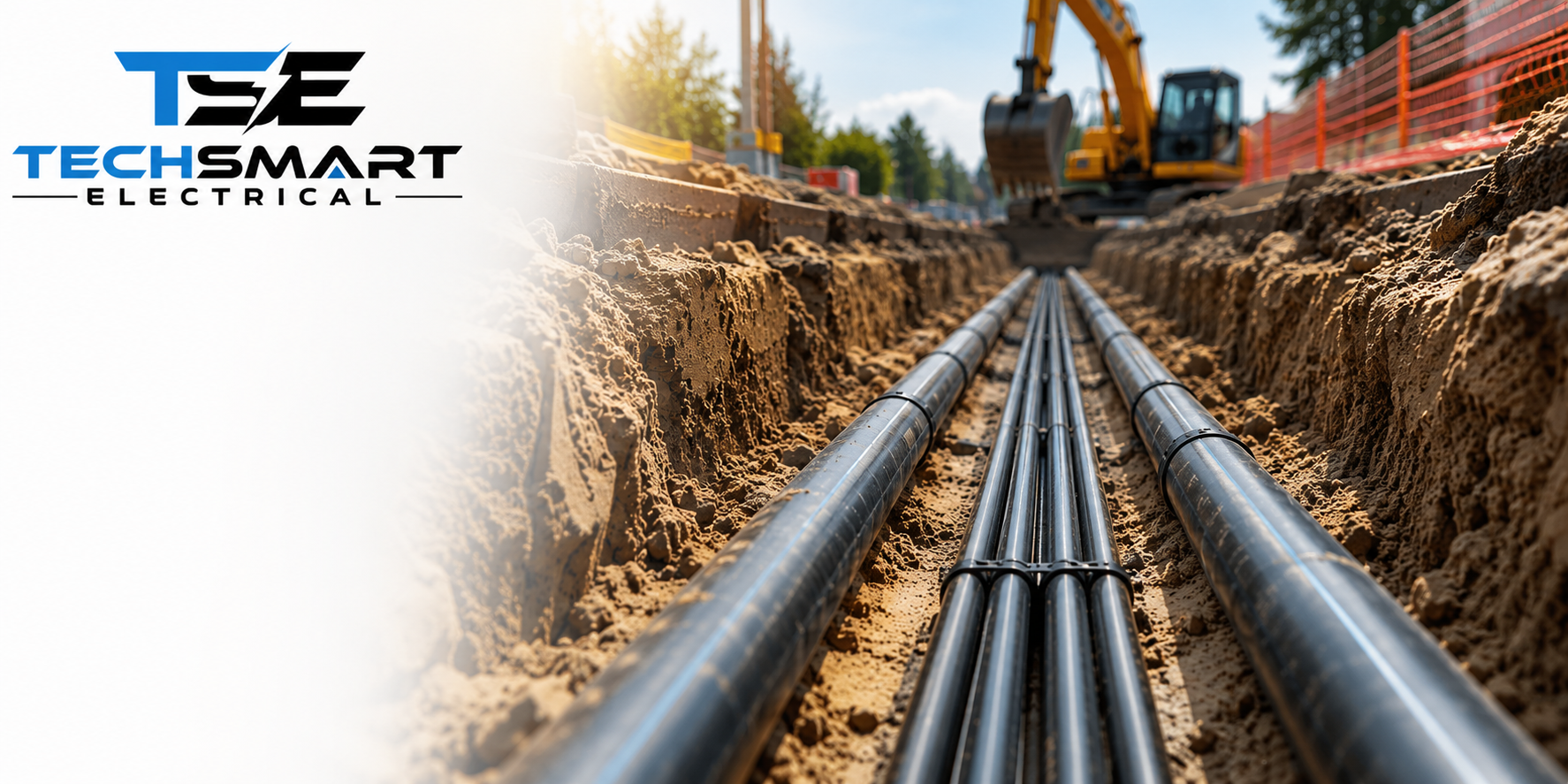
Modern infrastructure depends on reliable electrical networks, yet many people rarely think about the systems carrying power beneath their feet. Whether it’s powering homes, commercial facilities, industrial sites, or public infrastructure, Underground cable installation has become an increasingly preferred solution due to its safety, aesthetics, and long-term reliability.
At Techsmart Electrical, we’ve seen firsthand how properly installed underground electrical systems can improve safety, reduce maintenance concerns, and provide a cleaner, more resilient power distribution solution. However, successful underground cabling projects require far more than simply burying wires in the ground. Proper planning, Trenching services, cable selection, installation methods, and future maintenance considerations all play critical roles.
This guide explains everything you need to know about underground cabling, including installation processes, benefits, common challenges, and the importance of ongoing Cable repairs when issues arise.
Before discussing installation methods, it’s important to understand what underground cabling actually involves.
Underground cables are electrical conductors installed below the ground surface to transmit power safely and efficiently. Unlike overhead power lines, these systems are protected from weather events, falling trees, vehicle impacts, and many environmental hazards.
They are commonly used in:
As urban development continues to expand, underground cabling has become a preferred option for many electrical infrastructure projects due to its reliability and visual appeal.
Many property owners initially focus on installation costs when comparing overhead and underground electrical systems. However, long-term performance often makes underground solutions more attractive.
One of the biggest advantages of Underground cable installation is enhanced safety.
Because cables are buried beneath the surface:
This makes underground systems particularly valuable in populated areas and high-traffic environments.
Overhead poles and power lines can negatively affect property aesthetics.
Underground electrical systems:
Many developers choose underground systems specifically for this reason.
Weather-related power interruptions are among the most common causes of electrical outages.
Because underground cables are protected from:
they often experience fewer service interruptions than overhead systems.
A successful underground electrical project requires multiple stages of planning and execution.
Every project begins with a detailed assessment.
Electrical professionals evaluate:
This stage helps identify potential challenges before construction begins.
One of the most important steps involves professional Trenching services.
Trenching creates the pathway where cables will be installed.
Key considerations include:
Improper trenching can create long-term reliability and safety issues.
In many projects, cables are not placed directly into the soil.
Instead, installers use:
These systems provide additional protection and make future maintenance easier.
Once trenches and conduits are prepared, cables are carefully installed.
Special attention is given to:
Professional handling is essential because cable damage during installation can create future failures.
After installation, trenches are backfilled using approved materials.
Proper backfilling:
The site is then restored to its original condition wherever possible.
Many people underestimate the importance of Trenching electrical services.
While cables often receive the most attention, trench quality directly impacts system performance and longevity.
Electrical regulations require specific trench depths depending on:
Shallow installations can create safety hazards and increase the risk of accidental damage.
A common challenge involves existing underground infrastructure.
Before excavation begins, contractors must identify:
Failure to locate these utilities can cause dangerous and costly incidents.
Water accumulation is a major threat to underground electrical systems.
Professional trench design incorporates:
These measures help maximize cable lifespan.
Different environments require different underground cabling approaches.
Modern housing estates increasingly utilize underground electrical networks.
Benefits include:
Shopping centres, office parks, and business complexes often rely on underground electrical distribution.
These systems support:
Industrial environments often require extensive underground electrical infrastructure.
Applications include:
Although underground systems are highly reliable, failures can still occur.
This makes professional Cable repairs an essential part of long-term system management.
Common causes include:
Even minor damage can eventually lead to significant electrical failures.
Property owners should monitor for:
These symptoms may indicate underground cable problems requiring investigation.
Today’s electrical professionals use advanced technology to locate faults accurately.
Methods include:
These tools help minimize excavation and reduce repair costs.
Several myths often create confusion when planning underground electrical projects.
While highly reliable, underground systems are not immune to damage.
Environmental conditions, installation errors, and external impacts can all contribute to failures.
Regular inspections and timely Cable repairs remain important.
Initial installation costs are often higher than overhead systems.
However, many projects experience savings through:
Long-term ownership costs can be highly competitive.
Electrical trenching requires specialized knowledge.
Professional Trenching electrical services ensure:
Electrical infrastructure should never be treated as a basic excavation project.
Based on industry experience, several practices consistently improve project outcomes.
Many property owners focus solely on current needs.
Installing additional conduits during construction can significantly reduce future upgrade costs.
Choosing high-quality cables, conduits, and protective systems often reduces maintenance expenses over the system’s lifespan.
Detailed utility records simplify future maintenance and help prevent accidental damage during future construction.
Comprehensive testing before commissioning helps identify issues before they become costly failures.
Testing should include:
As cities become denser and electrical demands continue to increase, underground electrical systems play a vital role in supporting reliable infrastructure.
Emerging trends include:
The demand for professional Underground cable installation services continues to grow as organizations seek safer, more resilient electrical solutions.
Underground cabling has become a cornerstone of modern electrical infrastructure. From improved safety and aesthetics to enhanced reliability, properly designed and installed underground systems offer significant long-term advantages.
However, successful projects depend on more than simply placing cables below ground. Proper planning, professional Trenching services, accurate installation techniques, ongoing maintenance, and timely Cable repairs all contribute to system performance and longevity.
Whether you’re developing a residential subdivision, upgrading a commercial facility, or planning industrial infrastructure, understanding how underground cables are designed, installed, and maintained can help ensure a safer and more reliable electrical network for years to come.
At Techsmart Electrical, informed decision-making starts with understanding the fundamentals, and underground cabling is one area where knowledge can significantly impact long-term results.
High-quality underground electrical cables can often last between 30 and 50 years or more when properly installed and maintained. Lifespan depends on factors such as cable quality, soil conditions, moisture exposure, load demands, and installation practices.
Professional Trenching services ensure the correct depth, spacing, drainage, and cable protection required for safe operation. Poor trench construction can lead to cable damage, premature failure, and expensive future repairs.
Electrical professionals use specialized diagnostic equipment such as cable fault locators, insulation testers, thermal imaging cameras, and time-domain reflectometry systems. These technologies help pinpoint faults while minimizing unnecessary excavation.
In many situations, yes. Because underground systems are protected from weather events, falling trees, vehicle impacts, and accidental contact, they often provide enhanced safety and reliability. However, they still require professional installation and maintenance.
Cable repairs should be carried out as soon as signs of damage or performance issues are detected. Delaying repairs can lead to larger failures, extended outages, higher repair costs, and potential safety risks. Regular inspections help identify problems before they become critical.
Techsmart Electrical is a locally owned company serving Melbourne and the surrounding areas. As leading specialists for commercial, industrial and residential electrician services, we prioritize customer satisfaction.


We are preferred electricians for Beacon Lighting and with that comes many bonuses for our customers. By using Techsmart Electrical as your preferred electrician, we can provide you with up to 20% off RRP of everything in store at Beacon Lighting, extended warranties on certain items and even free lighting design consultations.
Our team works closely alongside our home store in Taylors Lakes to deliver the best possible outcome for all installations. From installing one ceiling fan to wiring an entire home, Techsmart Electrical provides 100% satisfaction guarantee.
Contact us today to arrange your next installation.
Techsmart Electrical has always provided dependable and cutting-edge electrical contracting services and installations. Our qualified electricians offer services that are intended to support Melbourne businesses in growing and to give homeowners complete peace of mind.
It is entirely up to you where you want more power outlets in your home. Techsmart Electrical can install them wherever you need them. It's possible that all you need is to change your power outlets, which is a regular request. Even your outdated power sockets can be replaced with fresh models by our team in order to give your house the finishing touches.
With several years of experience, Techsmart Electrical’s licenced electricians can design and install any power point system, whether it's for a newly constructed home or an existing one. Call us and schedule a time for your power socket installation.












Techsmart Electrical is a Melbourne based electrical company. We understand the importance of top-quality workmanship, service and safety. With a professional approach, we are always ready to provide you with Master Electricians to deliver prompt electrical services for any situation.