

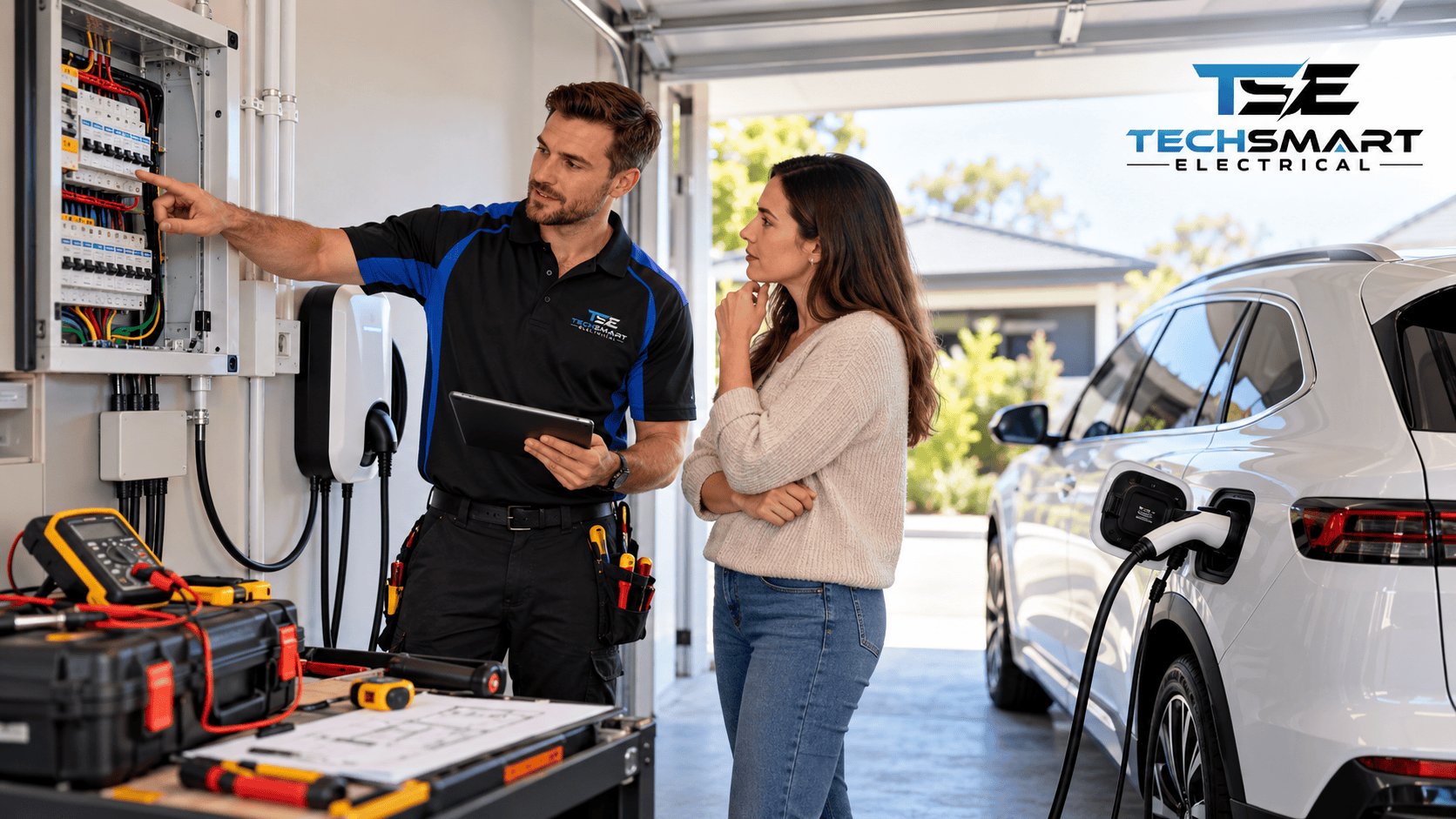
Buying an electric vehicle is only part of the transition to electric driving. For many homeowners, the bigger question comes later: Can my home actually handle regular EV charging safely and conveniently?
A standard household power outlet may be enough for occasional low-rate charging, but many EV owners eventually want a dedicated home charging point. That is where electrical capacity, switchboard condition, circuit design and charger location become important.
Planning ahead can prevent expensive electrical modifications later. It can also make your home more flexible if you upgrade to a larger EV, add another vehicle, install solar, or increase your household’s electricity demand.
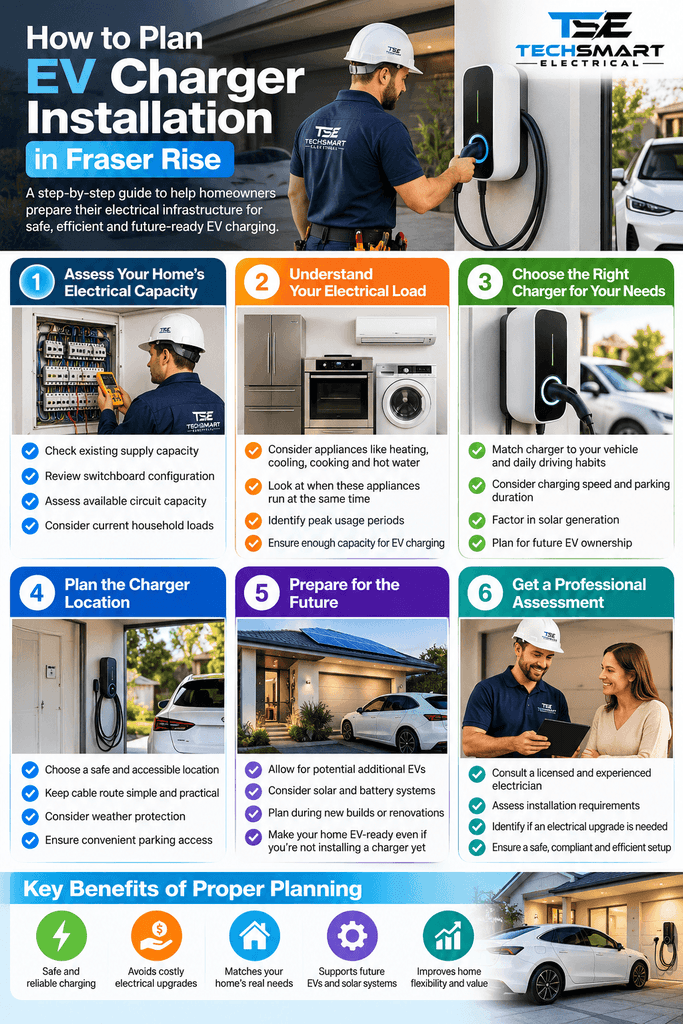
This guide explains what Fraser Rise homeowners should consider before arranging EV charger installation Fraser Rise, with a focus on preparing the home’s electrical infrastructure rather than simply choosing a charger.
Why EV Charging Requires More Planning Than a Standard Power Outlet
An EV charger can place a substantial and sustained load on a home’s electrical system.
Unlike many household appliances that operate for relatively short periods, an EV may draw significant power continuously for several hours. A home that already has high evening demand from air conditioning, electric cooking, hot-water systems, pool equipment or other appliances may have less available capacity than expected.
This does not automatically mean the property needs a major electrical upgrade.
The correct approach is to assess the existing installation first.
A professional assessment should consider:
For homeowners planning residential EV charger installation Fraser Rise, this assessment is one of the most valuable steps because it determines what can realistically be installed.
Understanding Your Home’s Electrical Load
What Is Electrical Load?
Electrical load refers to the amount of electricity being demanded by appliances and equipment connected to the home’s electrical system.
Consider a typical evening. An EV may be charging while the household is also using:
The important issue is not simply the total number of appliances in the house. It is when those appliances operate and how much power they draw at the same time.
This is why an experienced electrician looks at the property’s usage pattern rather than assuming that installing a higher-powered charger is automatically better.
Why an Electrical Load Assessment Matters
An electrical load assessment helps determine whether the existing supply and distribution equipment can accommodate the proposed EV charging equipment.
For example, imagine a Fraser Rise home with a modern switchboard and reasonable spare capacity. The owner wants an EV charger in the garage.
The assessment may show that the existing installation can accommodate the charger without a major upgrade.
Now consider another property where electric heating, cooking and hot water already create substantial demand. Installing a high-output charger without considering those loads could result in unnecessary stress on the electrical installation.
The solution might involve a different charger configuration, load management or an electrical upgrade.
The point is simple: capacity should be assessed before equipment is selected.
EV Charger Selection: Don’t Automatically Choose the Fastest Option
A common misconception is that the most powerful EV charger is always the best choice.
It isn’t.
The appropriate charger depends on the vehicle, driving habits, available electrical capacity and how long the vehicle normally sits at home.
For example, someone who drives 30–40 kilometres per day and parks at home overnight may have little practical benefit from installing the highest available charging rate.
A moderate charging rate may comfortably replace the energy used during the day’s driving while putting less demand on the home’s electrical infrastructure.
When planning EV charger installation Fraser Rise, consider:
The best installation is the one that matches the home’s real requirements.
EV-Ready Home Planning Before Installation
An EV-ready home does not necessarily mean having a charger installed immediately.
It means preparing the electrical infrastructure and physical layout so that EV charging can be added efficiently when required.
This can be particularly useful during:
For example, if an electrician is already upgrading a switchboard during a renovation, it may be sensible to discuss future EV charging requirements at the same time.
Planning cable routes and suitable circuit provisions early can sometimes reduce the amount of future work required.
Think About Future Requirements
Your current EV may not be your next EV.
A homeowner might initially purchase a smaller electric vehicle but later move to an SUV with a larger battery. Another household may eventually have two EVs.
A future-proof electrical system should therefore consider reasonable future demand without recommending unnecessary upgrades.
That means discussing questions such as:
Good planning considers tomorrow without overspending today.
Switchboard Capacity and EV Charging
The Switchboard is one of the most important parts of the installation because it distributes electricity throughout the property and houses protective equipment.
An older or heavily occupied switchboard may not be ideally configured for adding a dedicated EV charging circuit.
During an inspection, an electrician may look at:
Does Every Home Need a Switchboard Upgrade?
No.
This is an important distinction.
A professional assessment may find that the existing switchboard is suitable for the proposed installation. In other cases, modifications or an upgrade may be appropriate.
The decision should be based on the actual condition and capacity of the electrical installation—not simply the age of the house.
Homeowners should be particularly cautious about installers who recommend major upgrades without explaining why the upgrade is required.
A good electrician should be able to explain the existing limitation, the proposed solution and the practical benefit.
Charging Circuit Design
Why a Dedicated EV Circuit Is Important
EV charging should be treated as a significant electrical load rather than simply plugging a charger into whichever outlet is closest.
A properly designed dedicated EV circuit allows the charging equipment to operate with appropriate circuit protection and wiring for its intended load.
The circuit design should account for:
This is one area where DIY modifications or improvised extension-cord arrangements should be avoided.
An EV charger is connected to the home’s electrical infrastructure for repeated, sustained charging. The installation therefore needs to be designed for the actual duty it will perform.
Charging Point Location: Where Should the Charger Go?
The ideal charging point location is not always the closest point to the switchboard.
A practical installation considers both electrical and everyday usability.
Ask yourself:
Where does the vehicle normally park?
If the car is parked inside a garage, a wall-mounted charger may be convenient. If the vehicle is normally parked on a driveway, the charger may need to be positioned differently.
The electrician should consider:
A Real-World Example
Imagine a homeowner installs a charger beside the garage door because it is close to the switchboard.
Six months later, they discover that the vehicle’s charging port is on the opposite side of the car. The charging cable now has to stretch across the vehicle’s path every evening.
Technically, the charger works.
Practically, the installation is inconvenient.
A few minutes spent considering vehicle position and cable reach before installation could have prevented the problem.
This is why charging point location should be considered during the planning stage rather than after the electrical work begins.
EV Charging and Solar Power
Homeowners with rooftop solar often ask whether their EV can be charged using solar energy.
The answer is yes, but the practical outcome depends on the home’s solar generation, electricity consumption, charging schedule and equipment.
During strong daytime solar production, an EV may be able to absorb surplus generation. However, household demand changes throughout the day.
For example:
This means solar and EV charging should be considered together rather than assuming that a charger will automatically run entirely from solar energy.
If you are planning both systems, discuss them with your Fraser Rise Electrician before installation.
Choosing an Electrician for EV Charging Work
Installing an EV charger involves more than mounting equipment on a wall.
The electrical work should be assessed and completed by an appropriately licensed professional who understands residential electrical installations and EV charging requirements.
When comparing an EV charger electrician Fraser Rise, homeowners should ask practical questions rather than choosing solely on price.
Questions Worth Asking
A reliable professional should be comfortable explaining the reasoning behind their recommendations.
Common Mistakes Homeowners Make
Choosing the Charger Before Assessing the Home
It is tempting to buy a charger first and then find someone to install it.
A better approach is to assess the property first.
The electrical system may influence which charger is appropriate.
Assuming Faster Charging Is Always Better
A high-powered charger can be useful in the right circumstances, but higher output can also increase electrical demand and installation requirements.
Choose charging capacity based on actual usage.
Ignoring Existing Household Loads
A charger doesn’t operate in isolation.
If your home already has high electrical demand, that needs to be considered before adding another substantial load.
Installing the Charger Without Considering Cable Reach
A technically correct installation can still be inconvenient if the charging cable does not comfortably reach the vehicle.
Plan around how the car is actually parked.
Forgetting Future EV Requirements
If you expect another EV in the future, mention it during the initial planning process.
It may influence switchboard capacity, cable routing or the physical location of equipment.
Treating a Garage Outlet as a Permanent EV Solution
Occasional low-rate charging from an existing outlet may be suitable in some circumstances, but homeowners should not assume that an ordinary outlet is automatically an appropriate long-term solution for regular EV charging.
A dedicated installation should be evaluated according to the vehicle, charger and electrical system.
Practical Planning Checklist for Fraser Rise Homeowners
Before arranging an installation, work through this checklist.
Electrical
Property
EV
Professional Assessment
Before work begins, ask the electrician to explain:
This gives you a much clearer picture of what you are paying for and why.
Expert Advice: Plan Around Your Driving Habits
One of the most useful pieces of advice for homeowners is to start with how you use the vehicle, not the advertised charging speed.
Suppose you drive to work during the week, arrive home at 6 pm and leave again at 7 am. Your vehicle has roughly 13 hours available for charging every night.
You may not need an extremely high charging rate to replenish the energy used during an ordinary commute.
Conversely, if you regularly drive long distances, return home late and need substantial battery capacity restored before leaving early the next morning, a higher charging rate may make more sense.
This is where professional planning adds value.
The goal isn’t to install the biggest possible system. It is to install a safe, practical and appropriately sized system that works with your home’s electrical capacity and your lifestyle.
How to Make Your Home More Future-Ready
If EV ownership is likely to become a long-term part of your household, think beyond the first charger.
A genuinely useful future-proof electrical system might account for:
That does not mean installing everything immediately.
Instead, it means making sensible decisions today that avoid creating unnecessary obstacles tomorrow.
For example, during a switchboard upgrade, discussing future EV charging requirements with your electrician may help determine whether additional capacity or suitable space should be considered.
Likewise, during a renovation, planning a sensible cable route can be easier before walls, ceilings or landscaping are completed.
Conclusion
Preparing a home for EV ownership is not simply about choosing a charger and finding a place to mount it. The electrical capacity of the property, existing household loads, switchboard condition, dedicated circuit requirements and charging point location all influence the quality of the final installation.
For homeowners considering EV charger installation Fraser Rise, planning early can make the process safer, more practical and easier to expand later.
The most useful approach is to create an EV-ready home around your actual driving habits and future electrical needs. A professional Fraser Rise Electrician can assess the existing installation, identify capacity constraints and explain what needs to change—and what does not.
For homeowners specifically considering residential EV charger installation Fraser Rise, the goal should be simple: a charging system that works reliably today while leaving sensible options open for tomorrow.
FAQ: EV Charger Installation in Fraser Rise
1. Does every Fraser Rise home need a switchboard upgrade for EV charging?
No. It depends on the condition, configuration and available capacity of the existing electrical installation.
Some homes may already have a suitable switchboard and sufficient capacity for the proposed charger. Others may need modifications because of limited space, outdated equipment, high existing demand or the requirements of the selected charging system.
The correct way to determine this is through an electrical assessment rather than assuming an upgrade is necessary.
2. How do I know what EV charger size my home needs?
Start with your vehicle and driving habits.
Consider your vehicle’s maximum AC charging capability, average daily kilometres, how long the car normally remains parked and your existing household electrical demand.
A homeowner who drives relatively short distances and leaves the vehicle at home overnight may not need the highest available charging output.
An electrician can then assess whether the preferred charger can be accommodated by the home’s electrical system.
3. Can I prepare my home for an EV before buying an electric car?
Yes. This can be particularly useful during renovations, switchboard upgrades or new construction.
You can discuss future EV requirements, likely charging point location, cable routing and electrical capacity with an electrician.
Even if you don’t install the charger immediately, understanding the infrastructure requirements can prevent awkward or expensive changes later.
4. Is a dedicated charging circuit necessary?
The appropriate circuit arrangement depends on the charger and installation, but EV charging should be treated as a significant electrical load.
A dedicated circuit can provide an appropriate electrical path and protection for the charging equipment and avoids treating EV charging as an ordinary portable appliance.
The electrician should determine the appropriate circuit configuration based on the equipment specifications and the property’s electrical installation.
5. What is the biggest mistake to avoid when planning residential EV charger installation Fraser Rise?
The biggest mistake is treating the charger as an isolated product rather than part of the home’s electrical system.
Choosing a charger based only on maximum charging speed can overlook switchboard capacity, existing household loads, cable routing and the practical location of the vehicle.
A better approach is to assess the home first, understand your charging requirements and then select an appropriate installation.
Techsmart Electrical is a locally owned company serving Melbourne and the surrounding areas. As leading specialists for commercial, industrial and residential electrician services, we prioritize customer satisfaction.


We are preferred electricians for Beacon Lighting and with that comes many bonuses for our customers. By using Techsmart Electrical as your preferred electrician, we can provide you with up to 20% off RRP of everything in store at Beacon Lighting, extended warranties on certain items and even free lighting design consultations.
Our team works closely alongside our home store in Taylors Lakes to deliver the best possible outcome for all installations. From installing one ceiling fan to wiring an entire home, Techsmart Electrical provides 100% satisfaction guarantee.
Contact us today to arrange your next installation.
Techsmart Electrical has always provided dependable and cutting-edge electrical contracting services and installations. Our qualified electricians offer services that are intended to support Melbourne businesses in growing and to give homeowners complete peace of mind.
It is entirely up to you where you want more power outlets in your home. Techsmart Electrical can install them wherever you need them. It's possible that all you need is to change your power outlets, which is a regular request. Even your outdated power sockets can be replaced with fresh models by our team in order to give your house the finishing touches.
With several years of experience, Techsmart Electrical’s licenced electricians can design and install any power point system, whether it's for a newly constructed home or an existing one. Call us and schedule a time for your power socket installation.












Techsmart Electrical is a Melbourne based electrical company. We understand the importance of top-quality workmanship, service and safety. With a professional approach, we are always ready to provide you with Master Electricians to deliver prompt electrical services for any situation.