

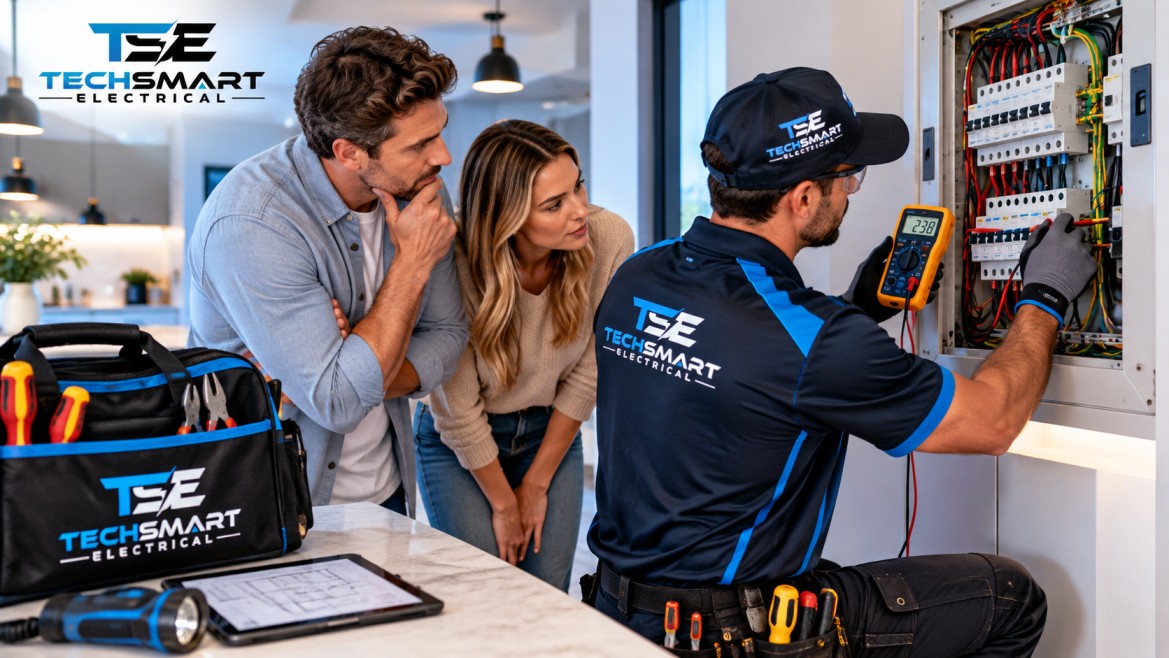
Electrical problems rarely arrive at a convenient time. A power point may suddenly stop working, lights may flicker when an appliance starts, or a circuit breaker may trip repeatedly without an obvious reason. In some cases, everything appears normal until a fault becomes more serious.
For homeowners and businesses, understanding electrical fault finding in Taylors Hill can make these situations much easier to manage. Fault finding is not simply about resetting a breaker or replacing a switch. It involves identifying why the electrical system is behaving abnormally and locating the underlying problem safely.
The Common Electrical Faults in Taylors Hill can range from overloaded circuits and damaged wiring to loose connections, insulation deterioration and appliance-related faults. Some are relatively straightforward to identify, while intermittent problems can require systematic testing and specialist diagnostic equipment.
This guide explains what causes common electrical faults, how professional fault diagnosis works, what different testing methods reveal and when it is sensible to arrange an inspection.
Homes in Taylors Hill can have very different electrical characteristics depending on their age, renovations, extensions, appliances and previous electrical work.
Some common symptoms include:
A symptom alone does not necessarily identify the fault.
For example, a circuit breaker that trips when a particular appliance is switched on could indicate an appliance problem, an overloaded circuit, a wiring issue or another electrical fault. Replacing the breaker without investigating the cause does not solve the underlying problem.
That is why professional fault finding starts with diagnosis rather than guesswork.
An electrical fault can affect much more than convenience.
A persistent fault may cause nuisance tripping, damage electrical equipment or create unsafe conditions. Some faults are also intermittent, which makes them particularly difficult to identify without systematic testing.
Professional electrical fault finding in Taylors Hill typically involves narrowing the problem down from the symptom to the affected circuit, component or connection.
The process may involve:
The important distinction is between finding the symptom and finding the cause.
A qualified electrician generally approaches fault diagnosis methodically.
The first useful information often comes from the person experiencing the problem.
Questions can include:
These details can provide valuable clues before testing begins.
The electrician may inspect accessible components for obvious signs of trouble.
This can include checking for:
A visual inspection does not replace electrical testing, but it can help establish where further investigation should focus.
Testing is used to obtain objective information about the condition of the circuit.
Depending on the problem, this may include continuity checks, voltage measurements, insulation resistance testing, and other appropriate tests.
If the fault affects only part of a system, the electrician may isolate sections of the circuit to narrow down where the problem is located.
This is particularly useful for faults that are not immediately visible.
Once the suspected fault has been located, the electrician can explain what is causing the problem and what repair or further investigation may be required.
This approach is generally more reliable than replacing multiple components and hoping the problem disappears.
Wiring faults can occur for several reasons.
Potential causes include:
Some wiring faults are straightforward because there is visible damage. Others can remain hidden inside walls, ceilings or other inaccessible areas.
An intermittent fault can be particularly frustrating.
For example, imagine a homeowner reports that the safety switch trips approximately twice a week. The electrical system may appear completely normal when an electrician arrives.
That does not mean there is no fault.
Systematic testing can help determine whether insulation deterioration, leakage, a particular circuit or an appliance is contributing to the problem.
Insulation resistance testing helps assess whether electrical insulation is providing the required separation between conductors and other parts of an electrical system.
When insulation deteriorates, unwanted current leakage can occur.
This can happen because of factors such as:
The testing method and equipment used depend on the electrical system and the nature of the suspected problem.
An important point for homeowners is that insulation problems are not always visible. A cable can look fine externally while its insulation performance has deteriorated.
That is one reason electrical testing can provide information that a basic visual inspection cannot.
Voltage testing can help establish whether the expected electrical potential is present at appropriate points within a circuit.
It can be useful when investigating:
However, voltage readings need to be interpreted in context.
A single reading does not automatically explain the cause of a fault. An electrician may need to compare readings at different points in the circuit and under different operating conditions.
For instance, if power is available at one point but absent farther along the circuit, this may help narrow the location of the interruption.
Circuit testing involves examining the electrical circuit to establish how it is functioning and where a problem may exist.
Testing may be particularly useful when:
The exact testing procedure depends on the circuit and the suspected fault.
Professional testing should be carried out using appropriate equipment and procedures rather than relying on trial and error.
Repeated circuit breaker operation is one of the more common reasons homeowners seek electrical assistance.
A breaker can trip because of an electrical condition that requires investigation.
Possible causes can include:
The pattern can provide useful information.
If the breaker trips immediately when a particular appliance is switched on, that appliance may be relevant to the investigation.
If it trips randomly when different appliances are operating, the electrician may need to examine the circuit more broadly.
Repeatedly resetting the breaker without understanding why it trips is not a substitute for diagnosis.
Flickering lights can have different causes, and the pattern matters.
A single faulty lamp or fitting may behave differently from multiple lights flickering across a circuit.
Possible causes may include:
For example, if lights dim briefly whenever a high-load appliance starts, that observation is worth reporting to the electrician.
Do not assume that flickering is simply an old light bulb, particularly when multiple fittings are affected.
A dead power point may result from a local problem or a wider circuit issue.
An electrician may need to determine whether:
Replacing an outlet without identifying why it stopped working may not address the actual fault.
If the outlet shows signs of heat, burning, melting, cracking, or unusual smell, stop using it and arrange professional assessment.
Some electrical symptoms deserve prompt professional attention.
Consider arranging an inspection if you notice:
If there is smoke, fire or an immediate danger, prioritise personal safety and contact the appropriate emergency service.
For less urgent but persistent issues, a Taylors Hill Electrician can investigate the electrical system and determine whether the symptom comes from the fitting, appliance, circuit or wiring.
Once the fault has been identified, the appropriate repair depends on its cause.
Electrical repairs Taylors Hill may involve addressing a faulty accessory, repairing or replacing damaged wiring, correcting a connection issue, resolving an overloaded circuit or dealing with another identified electrical problem.
The repair should follow the diagnosis.
This is important because two properties can have exactly the same symptom but require completely different solutions.
For example, two homes may both experience a tripping safety switch. One could have a faulty appliance, while another could have an insulation-related issue on a fixed circuit.
The symptom is the same. The solution is not.
Good information can make fault diagnosis more efficient.
Before the appointment, write down:
If possible, note exactly what was happening immediately before the fault occurred.
For example:
“The kitchen power stopped when the dishwasher started.”
is much more useful than:
“The electricity keeps going off.”
Small details can help an electrician develop a logical testing strategy.
A breaker that repeatedly trips is giving you information. Continually resetting it without investigating the cause is not a repair.
An appliance may be responsible, but the circuit itself can also be involved.
Changing a power point, switch or breaker without identifying the underlying problem can waste time and money.
A fault that occurs only occasionally is still worth investigating.
In fact, intermittent faults can sometimes require more careful diagnosis because the symptom may disappear before testing begins.
Electrical systems require appropriate knowledge, equipment, and procedures. Homeowners should not attempt electrical repairs or testing simply because the problem appears straightforward.
Fault finding is reactive, but good electrical maintenance can help identify developing problems earlier.
Useful habits include:
During renovations, extensions or major appliance installations, it is also sensible to consider whether the existing electrical system is suitable for the property’s current and future demands.
Electrical testing is most useful when it answers a specific diagnostic question.
For example:
Is there a continuity problem?
Appropriate continuity testing may help establish whether a circuit path is complete.
Is insulation deteriorating?
Insulation resistance testing may provide information about insulation performance.
Is the expected voltage present?
Voltage testing can help establish where electrical supply is present or absent.
Which part of the circuit is affected?
Circuit testing and systematic isolation can help narrow the fault location.
This illustrates why professional diagnosis is more than simply connecting a meter and looking at a number. The reading needs to be interpreted according to the circuit, test conditions, and suspected fault.
When arranging electrical fault finding in Taylors Hill, consider whether the electrician explains the diagnostic process clearly.
Useful questions include:
Clear communication matters because fault diagnosis can involve several stages.
A professional should be able to explain findings in practical language rather than leaving the homeowner unsure about what was tested and why.
A failed switch or outlet may be the visible symptom of another problem.
If the fault happens occasionally, note the time, weather conditions if relevant, appliances running, and what happened immediately beforehand.
A warm or discoloured outlet should not be treated as normal.
An electrician needs safe access to investigate circuit operation and carry out relevant testing.
Knowing what failed is useful. Knowing why it failed can be even more valuable.
A circuit that keeps shutting down should be investigated rather than repeatedly reset.
The Common Electrical Faults in Taylors Hill can present themselves through simple symptoms such as flickering lights, dead outlets or repeated breaker trips, but the underlying causes can be considerably more complex.
That is why electrical fault finding in Taylors Hill is valuable when an electrical problem keeps returning, or its cause is unclear. Proper fault diagnosis, electrical testing, insulation resistance checks, voltage testing and circuit testing can help narrow down the source of the problem instead of relying on guesswork.
If you notice unusual electrical behaviour, pay attention to when it happens and what equipment was operating at the time. Share those details with a qualified Taylors Hill Electrician, and avoid attempting electrical repairs yourself. Where a fault has been identified, appropriate electrical repairs in Taylors Hill can then be considered based on the actual cause.
The key principle is simple: find the reason for the fault before deciding how to fix it. A methodical approach can make electrical problems easier to understand, address, and prevent from becoming recurring issues.
Electrical fault finding is the systematic process of identifying the cause and location of an electrical problem. It can involve visual inspection, voltage testing, continuity checks, insulation resistance testing, and circuit testing, depending on the symptoms. The objective is to establish what is causing the abnormal behaviour before deciding on the appropriate repair.
The pattern of the tripping can provide clues, but it does not always identify the cause conclusively. If the circuit trips whenever one particular appliance is connected or switched on, the appliance may need investigation. If it trips with different appliances or when no obvious load has changed, the fixed wiring or circuit may require further testing. A qualified electrician can isolate and test the relevant parts systematically.
Yes. Some electrical faults are intermittent and may not produce obvious symptoms continuously. Insulation deterioration, loose connections and other developing issues may only become apparent under particular operating conditions. This is why a reported pattern of intermittent tripping, flickering or unusual electrical behaviour should not automatically be dismissed simply because the system appears normal when inspected.
There is no single timeframe because it depends on the type of fault, accessibility, circuit complexity, and whether the problem is intermittent. A simple faulty accessory may be identified quickly, while a concealed wiring fault can require considerably more systematic investigation. Providing accurate information about when and how the fault occurs can help make the diagnostic process more efficient.
Yes. Fault finding focuses on identifying the cause and location of an electrical problem, while electrical repair involves correcting the identified issue. The two processes are closely connected. Good diagnosis should generally come before repair because replacing a component without understanding the underlying cause may leave the original problem unresolved.
Techsmart Electrical is a locally owned company serving Melbourne and the surrounding areas. As leading specialists for commercial, industrial and residential electrician services, we prioritize customer satisfaction.


We are preferred electricians for Beacon Lighting and with that comes many bonuses for our customers. By using Techsmart Electrical as your preferred electrician, we can provide you with up to 20% off RRP of everything in store at Beacon Lighting, extended warranties on certain items and even free lighting design consultations.
Our team works closely alongside our home store in Taylors Lakes to deliver the best possible outcome for all installations. From installing one ceiling fan to wiring an entire home, Techsmart Electrical provides 100% satisfaction guarantee.
Contact us today to arrange your next installation.
Techsmart Electrical has always provided dependable and cutting-edge electrical contracting services and installations. Our qualified electricians offer services that are intended to support Melbourne businesses in growing and to give homeowners complete peace of mind.
It is entirely up to you where you want more power outlets in your home. Techsmart Electrical can install them wherever you need them. It's possible that all you need is to change your power outlets, which is a regular request. Even your outdated power sockets can be replaced with fresh models by our team in order to give your house the finishing touches.
With several years of experience, Techsmart Electrical’s licenced electricians can design and install any power point system, whether it's for a newly constructed home or an existing one. Call us and schedule a time for your power socket installation.












Techsmart Electrical is a Melbourne based electrical company. We understand the importance of top-quality workmanship, service and safety. With a professional approach, we are always ready to provide you with Master Electricians to deliver prompt electrical services for any situation.