


A growing household usually means more electrical equipment, more appliances and greater demand for power. What once worked comfortably for a family of three may become inconvenient when children get older, someone starts working from home or the kitchen receives new appliances.
Many homeowners only think about their electrical system when a circuit breaker keeps tripping, lights begin flickering or they run out of convenient power points. However, waiting until these problems appear can make future upgrades more complicated than necessary.
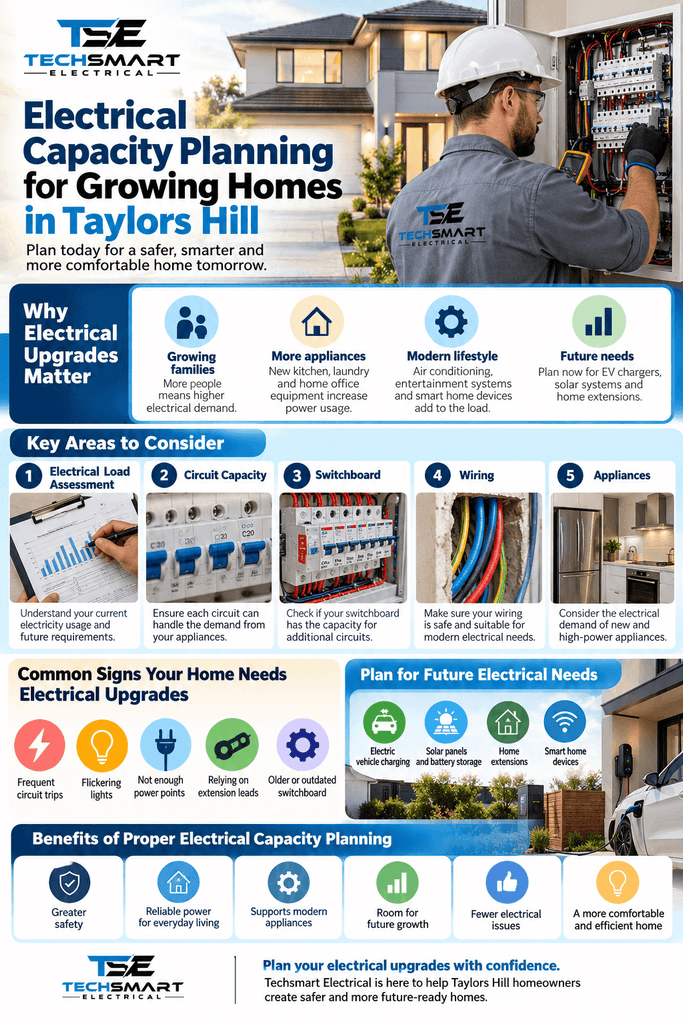
Planning electrical upgrades Taylors Hill homeowners may need is about understanding how much electricity a property uses today and how its requirements could change over the next few years.
A well-planned electrical system should support everyday activities without placing unnecessary strain on circuits, wiring or the switchboard. It should also allow suitable room for future additions, provided the property’s electrical supply and installation can safely accommodate them.
At Techsmart Electrical, understanding household electrical requirements is an important starting point when considering electrical improvements. Rather than recommending upgrades without understanding the property, homeowners should begin with an assessment of their existing electrical installation, appliance demand and future plans.
This guide explains how electrical capacity planning works, what homeowners should consider and when professional electrical improvements may be worthwhile.
Household electricity consumption rarely stays the same. Families gradually introduce equipment that may increase the demand placed on their electrical installation.
Consider a home that originally had:
A few years later, the same property might have multiple televisions, additional computers, a dishwasher, an induction cooktop, air conditioning and other high-powered appliances.
Each addition changes how electricity is used around the home.
The important point is that adding more appliances does not automatically mean the entire electrical system needs replacing. The existing supply, circuit arrangements, protective devices and wiring must first be assessed.
For homeowners considering electrical upgrades Taylors Hill, understanding this difference helps avoid unnecessary work while identifying genuine capacity limitations.
Certain warning signs suggest that an electrical installation deserves professional attention.
These include:
These symptoms do not all indicate insufficient capacity. For example, flickering lights can have several causes, including loose connections or supply problems.
Repeated circuit breaker trips should never be ignored or treated as something to work around. Stop using affected equipment where appropriate and arrange an assessment by a licensed electrician.
Circuit capacity is one of the most important considerations when planning electrical improvements.
An electrical circuit supplies power to connected lights, outlets or fixed appliances. Every circuit has limits based on its design, conductor size, protective devices and installation conditions.
When the electrical demand exceeds what a circuit can safely supply, its protective device may operate and disconnect the circuit.
This is why simply adding more power points does not necessarily solve an electrical capacity problem.
Think of an electrical circuit as a pathway supplying electricity to different parts of your home.
A circuit may supply several power outlets in a living area. If multiple high-demand appliances are connected to those outlets, the total demand may become unsuitable for that circuit.
For example, imagine a household regularly using:
If these devices share a circuit, their combined electrical demand needs to be considered.
A licensed electrician can determine whether the circuit arrangement is appropriate and whether additional circuits would provide a better solution.
Additional circuits can help distribute electrical demand more appropriately.
They may be worth considering when homeowners install:
However, installing additional circuits is not always possible without further work. The electrician must check the switchboard, available capacity, supply arrangements and the suitability of the existing wiring.
The goal is to create an installation that distributes demand safely rather than simply increasing the number of connections.
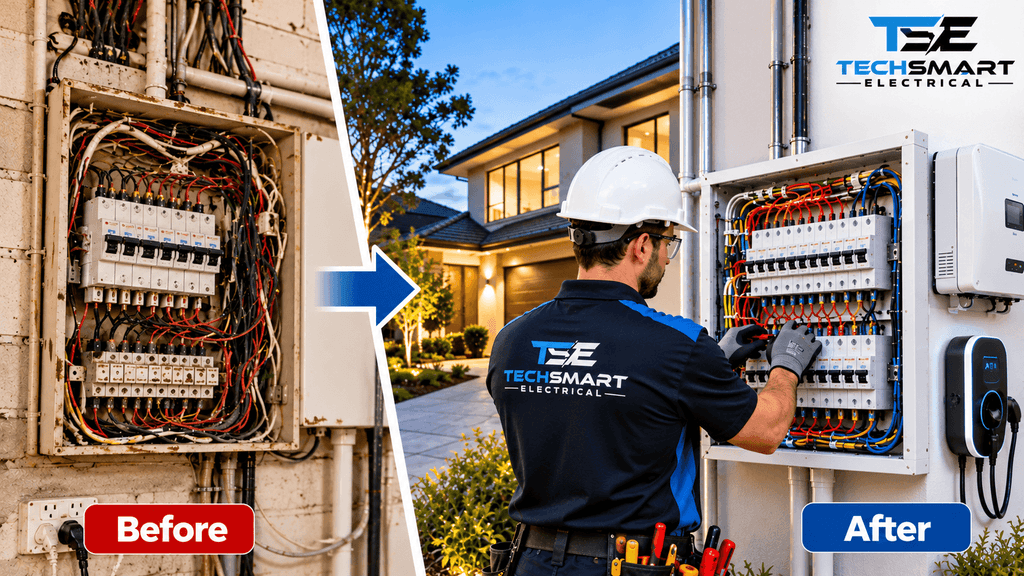
An electrical load assessment helps establish how much electricity a property uses and whether the existing installation can support additional demand.
It is particularly useful when homeowners are planning renovations, purchasing larger appliances or preparing for future electrical improvements.
A professional assessment may consider several factors.
1. Existing appliance demand
The electrician reviews the electrical requirements of existing household appliances, including equipment that consumes significant power.
2. Existing circuit arrangements
The electrician identifies which circuits supply different areas and appliances and considers their protective devices and suitability.
3. Switchboard capacity
The existing switchboard is assessed to determine whether its configuration and available capacity can accommodate proposed changes.
4. Electrical supply limitations
The property’s incoming electrical supply and relevant supply equipment may need to be considered, particularly when several substantial electrical loads are proposed.
5. Future electrical needs
The homeowner’s plans are discussed to understand whether additional circuits, equipment or other electrical changes may be required.
The result is a more informed upgrade plan based on the property’s actual requirements.
Two homes with similar floor plans can have very different electricity requirements.
One household may use gas cooking and heating, while another relies on electric appliances for most activities.
Similarly, a family with several people working from home may use considerably more electrical equipment than a household where most activities take place outside the property.
A proper electrical load assessment considers how the home is actually used instead of relying on assumptions.
For homeowners planning electrical wiring upgrades Taylors Hill, this assessment can help establish whether the existing installation needs minor modifications or more substantial improvements.
Modern appliances offer convenience, but some place significantly greater demands on household electrical installations than others.
Understanding appliance demand helps homeowners plan upgrades more effectively.
Kitchens often contain several high-demand appliances.
Examples include:
Not every kitchen appliance requires an individual circuit. However, certain appliances may require dedicated circuits depending on their ratings, manufacturer instructions and installation requirements.
If you are renovating your kitchen, discuss the appliance specifications with your electrician before cabinetry and electrical points are finalised.
This makes it easier to plan suitable connections and avoid inconvenient changes later.
Air conditioning and heating equipment can contribute considerably to household electrical demand.
A home that adds multiple air conditioning systems may need its existing electrical arrangements reviewed.
The electrician should consider the equipment’s rated electrical requirements, starting characteristics where relevant and whether the existing supply and circuit arrangements are suitable.
Washing machines and clothes dryers can create additional demand, particularly when both are used regularly.
Homeowners should consider their laundry layout and the electrical requirements of the appliances before installing new equipment.
Planning suitable electrical connections can also reduce dependence on extension leads.
Home offices are becoming more common in residential properties.
A typical setup might include:
Individually, many of these devices have relatively modest demand. However, several devices operating together still contribute to the circuit’s overall load.
A residential electrician Taylors Hill homeowners engage should consider these everyday requirements when discussing electrical improvements.
The switchboard is a central part of your home’s electrical installation.
It distributes electricity to different circuits and houses protective devices designed to help protect the electrical installation.
When planning additional electrical equipment, the switchboard needs to be considered alongside the circuits it supplies.
An older or unsuitable switchboard may show several warning signs, including:
A switchboard should not be judged by its appearance alone. Its condition, configuration, protection arrangements and suitability for the installation need professional assessment.
A switchboard upgrade may be appropriate when:
Safety switches, also known as residual current devices (RCDs), are an important part of electrical protection.
They are designed to disconnect electricity when certain current leakage conditions are detected, helping reduce the risk of electric shock.
Circuit breakers and safety switches perform different protective functions. An appropriate combination of protective devices should be selected based on the installation and applicable requirements.
An electrician should explain whether repairing, modifying or replacing the existing switchboard is the most suitable option.
Wiring is another important part of household capacity planning.
Even if a switchboard has room for additional circuit breakers, the existing wiring must still be suitable for the intended electrical demand.
The condition, size, installation method and protective arrangements of the wiring all influence whether it can safely support proposed changes.
Electrical wiring may need attention when:
Electrical wiring upgrades Taylors Hill homeowners consider should be based on inspection and testing rather than the assumption that every older property needs complete rewiring.
In some homes, only particular circuits or sections may require attention. In others, more extensive improvements may be justified.
Consider a homeowner planning a kitchen renovation.
The original kitchen has a standard oven, a few power outlets and basic lighting. The new design includes an induction cooktop, a larger oven, a dishwasher and additional appliances.
If the electrical layout is considered only after the cabinetry is installed, making changes can become more difficult.
Planning electrical work early allows the electrician and renovation team to coordinate:
This approach can reduce avoidable rework and help the finished kitchen meet the household’s practical requirements.
Electrical capacity planning should not focus exclusively on the appliances currently installed in your home.
It should also consider realistic future requirements.
This does not mean homeowners need to install every possible electrical upgrade immediately. Instead, it means understanding which improvements may be necessary as the property develops.
An electric vehicle charger can introduce a substantial additional electrical load.
Before installing one, homeowners should have the property’s existing electrical supply and load arrangements assessed.
The assessment may consider:
An electrician can determine whether the existing installation can accommodate the charger or whether other modifications are necessary.
Solar panels and battery systems can change how electricity flows through a property.
However, installing these systems does not automatically remove the need for suitable electrical capacity.
The switchboard, existing wiring, inverter requirements and connection arrangements must be considered as part of the overall design.
Homeowners planning solar or battery installation should coordinate the electrical assessment with the appropriately qualified installation professionals.
Families may eventually convert garages, extend living areas or create additional bedrooms.
These changes can introduce new requirements for lighting, power outlets, heating, cooling and other electrical equipment.
Planning these requirements before construction begins helps establish whether existing circuits can be extended or additional circuits are needed.
Smart lighting, security systems, automated blinds and connected appliances can gradually increase the number of electrical devices around the home.
Most individual devices may have relatively low electrical demand, but their installation still needs to be planned properly.
A well-organised electrical layout can make future maintenance and improvements easier.
A sensible upgrade plan starts with identifying the household’s actual needs.
The following steps can help homeowners prepare before arranging electrical work.
Make a list of the appliances and electrical equipment used regularly.
Pay particular attention to larger appliances, heating and cooling systems and equipment that operates at the same time.
This gives your electrician a clearer picture of household demand.
Think about any electrical issues you have noticed.
For example:
Do not attempt to investigate internal wiring or switchboard components yourself. Report the symptoms to a licensed professional.
Consider what the household may need over the next three to five years.
This might include:
A realistic list helps prevent short-term decisions from overlooking foreseeable requirements.
A qualified electrician can inspect the relevant parts of the installation, assess circuit arrangements and determine whether additional capacity is available.
The assessment should also consider applicable electrical safety requirements and any limitations imposed by the existing supply.
Not every improvement needs to happen at once.
Safety-related defects should receive appropriate attention first. Other improvements can be planned according to urgency, budget and renovation timelines.
This makes the upgrade process more manageable without compromising essential safety requirements.
Even well-intentioned homeowners can make decisions that create unnecessary electrical problems.
Here are some mistakes worth avoiding.
Adding extra outlets increases convenience, but it does not automatically increase the capacity of the circuit supplying them.
The circuit’s total demand and protective arrangements still need to be considered.
Homeowners sometimes focus entirely on new appliances without considering whether the switchboard can appropriately support the proposed changes.
A switchboard assessment should form part of any substantial electrical upgrade plan.
A large appliance may have specific connection and circuit requirements.
Before purchasing equipment for a renovation, check its electrical specifications and discuss them with your electrician.
Extension leads and power boards are not substitutes for a properly planned permanent electrical installation.
Overloading them or using damaged equipment can create serious hazards.
Where permanent electrical outlets are required, ask a licensed electrician about suitable installation options.
A circuit breaker that trips repeatedly is signalling that something needs attention.
Repeatedly resetting it without identifying the cause can leave an underlying problem unresolved.
Never replace a protective device with one of a higher rating simply to stop it tripping.
An electrical installation should reflect the property’s realistic future use.
Considering future appliances and renovations during the planning stage can help avoid repeated modifications.
A few practical considerations can make electrical improvements more effective.
Think about appliance combinations, not just individual appliances. Two appliances may operate safely individually but create a different demand when used simultaneously.
Plan kitchen and laundry upgrades together with appliance selection. Confirm the electrical specifications before finalising the layout.
Keep your electrical documentation. Store relevant certificates, installation records and appliance information so future electricians can understand previous work.
Allow for realistic future requirements. Discuss potential additional circuits or suitable switchboard arrangements with your electrician rather than installing unnecessary equipment.
Prioritise electrical safety over convenience. Flickering lights, burning smells, unusual buzzing and repeated circuit trips should be assessed promptly. If you notice smoke, sparks or an immediate fire risk, keep away, switch off power only if safe to do so and contact emergency services where necessary.
Choose a qualified professional. In Victoria, electrical installation work must be undertaken by appropriately licensed electrical workers engaged through a registered electrical contractor.
Planning electrical improvements requires more than simply adding outlets or replacing a switchboard.
Homeowners need to understand their existing electrical installation, current appliance demand and the practical requirements of future improvements.
Techsmart Electrical provides an opportunity for Taylors Hill homeowners to discuss their electrical requirements and explore suitable upgrade options.
Whether you are considering additional circuits, switchboard improvements or electrical wiring upgrades, the starting point should be a proper understanding of the property’s existing installation.
A considered approach can help homeowners:
Rather than recommending the same solution for every household, electrical upgrade decisions should reflect the property’s condition, intended use and applicable safety requirements.
If you are planning electrical upgrades Taylors Hill homeowners commonly consider, Techsmart Electrical can be your point of contact for discussing your household’s electrical requirements and the next steps towards a suitable upgrade plan.
As households grow, their electrical requirements naturally change. New appliances, home offices, heating and cooling equipment and future technologies can all influence how much electricity a property needs.
The best way to manage these changes is through proper electrical capacity planning.
Understanding circuit capacity, electrical load, switchboard arrangements and wiring condition helps homeowners make informed decisions instead of waiting for electrical problems to develop.
Electrical upgrades Taylors Hill homeowners plan today should support both current household activities and realistic future requirements.
With professional assessment and careful planning, Techsmart Electrical can help homeowners explore suitable electrical improvements based on their property’s actual needs.
The key is simple: plan your electrical system around the way your household lives, not just the way it used to.
Common warning signs include repeated circuit breaker trips, insufficient power outlets, flickering lights and difficulty operating multiple appliances simultaneously.
However, these symptoms do not always mean the property has insufficient electrical capacity. For example, flickering lights may indicate a wiring fault or another electrical issue.
A licensed electrician should assess the switchboard, wiring, circuits and relevant electrical equipment to identify the actual cause. The electrician can then recommend whether repairs, additional circuits or more extensive improvements are appropriate.
Sometimes, yes. Additional power points may be installed using an existing circuit if its capacity, wiring and protective arrangements are suitable.
However, adding outlets does not increase the electrical capacity of the circuit itself.
If the existing circuit cannot safely accommodate the additional demand, the electrician may recommend a different arrangement, such as installing an additional circuit.
Whether the switchboard needs modification depends on its condition, configuration and available capacity. A professional assessment is necessary before deciding.
There is no single electrical capacity requirement that applies to every growing household.
A family’s requirements depend on the appliances it uses, the number of occupants, heating and cooling arrangements, cooking equipment and whether additional technologies such as electric vehicle chargers are installed.
For example, a household using electric cooking, multiple air conditioners and an electric vehicle charger may have different requirements from a similar-sized property using gas appliances.
An electrical load assessment helps establish the property’s existing demand and whether its electrical installation can support planned additions.
Electrical wiring upgrades should be considered when an inspection identifies deteriorated cables, unsuitable existing wiring, electrical faults or wiring that cannot safely support proposed changes.
They may also form part of a major renovation or switchboard improvement.
Importantly, not every older property requires complete rewiring. Sometimes particular circuits or sections of wiring need attention rather than the entire installation.
A licensed electrician can inspect and test the relevant wiring before recommending the appropriate scope of work.
Yes. Planning electrical work before renovation begins can make the process more efficient.
For example, a kitchen renovation may involve new cooking appliances, additional outlets, changed lighting positions and other electrical requirements.
Discussing these details with an electrician before cabinetry, plastering and other finishing work begins allows the electrical layout to be coordinated with the renovation.
It can also help identify whether additional circuits, switchboard modifications or wiring improvements are required.
Planning early is particularly useful when considering future electrical needs, as it allows homeowners to make informed decisions before the renovation is completed.
Techsmart Electrical is a locally owned company serving Melbourne and the surrounding areas. As leading specialists for commercial, industrial and residential electrician services, we prioritize customer satisfaction.


We are preferred electricians for Beacon Lighting and with that comes many bonuses for our customers. By using Techsmart Electrical as your preferred electrician, we can provide you with up to 20% off RRP of everything in store at Beacon Lighting, extended warranties on certain items and even free lighting design consultations.
Our team works closely alongside our home store in Taylors Lakes to deliver the best possible outcome for all installations. From installing one ceiling fan to wiring an entire home, Techsmart Electrical provides 100% satisfaction guarantee.
Contact us today to arrange your next installation.
Techsmart Electrical has always provided dependable and cutting-edge electrical contracting services and installations. Our qualified electricians offer services that are intended to support Melbourne businesses in growing and to give homeowners complete peace of mind.
It is entirely up to you where you want more power outlets in your home. Techsmart Electrical can install them wherever you need them. It's possible that all you need is to change your power outlets, which is a regular request. Even your outdated power sockets can be replaced with fresh models by our team in order to give your house the finishing touches.
With several years of experience, Techsmart Electrical’s licenced electricians can design and install any power point system, whether it's for a newly constructed home or an existing one. Call us and schedule a time for your power socket installation.












Techsmart Electrical is a Melbourne based electrical company. We understand the importance of top-quality workmanship, service and safety. With a professional approach, we are always ready to provide you with Master Electricians to deliver prompt electrical services for any situation.