

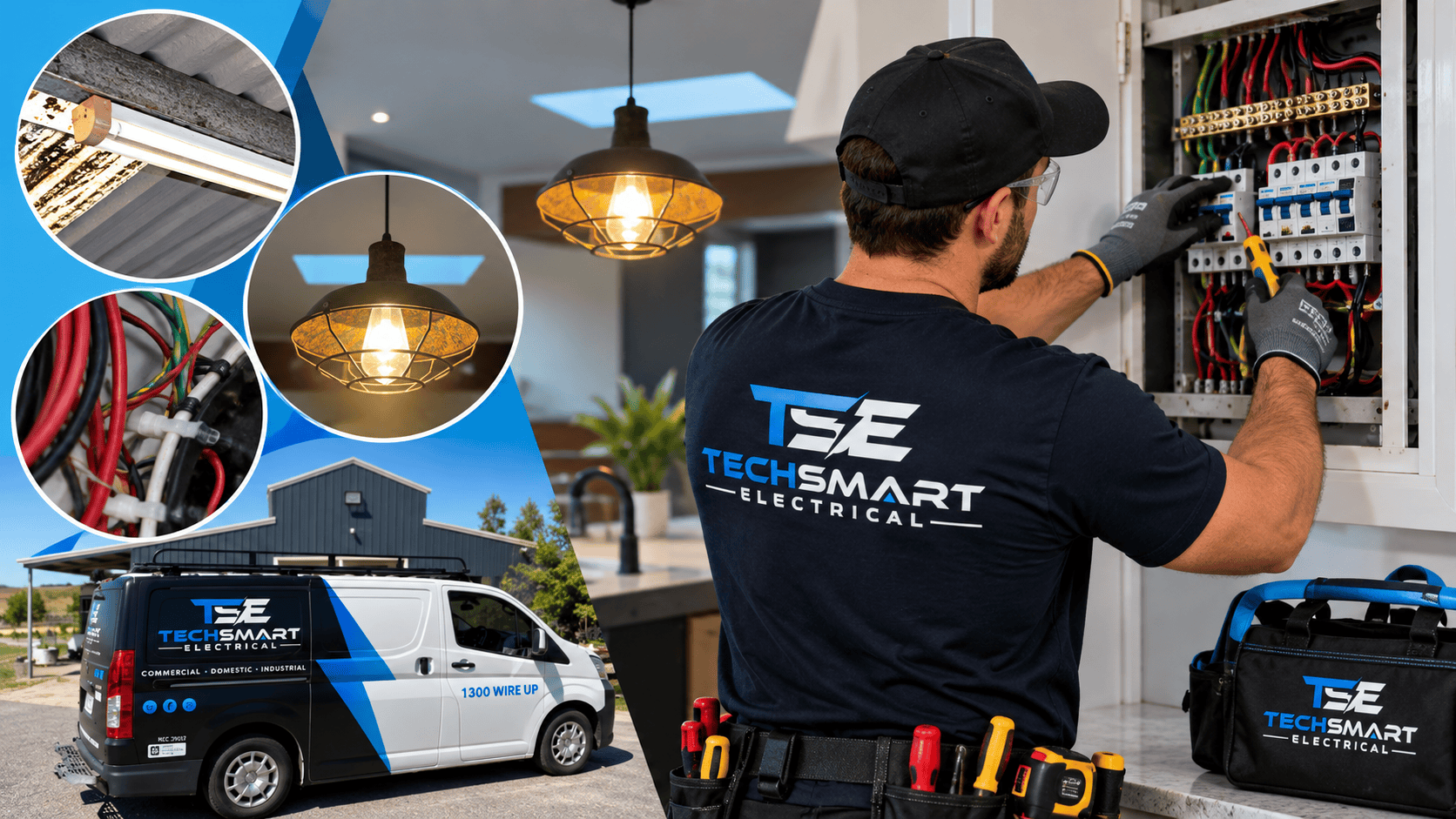
Electrical problems rarely begin with a dramatic failure. More often, they start with something easy to dismiss: a light that flickers for a few seconds, a circuit breaker that trips occasionally, or a power point that feels warmer than usual.
The problem is that these small signs can sometimes point to a larger electrical fault.
For homeowners, knowing when to investigate a problem and when to stop using an electrical circuit can prevent property damage, equipment failure, and serious safety risks. If you notice recurring electrical issues, contacting an emergency electrician in Newport can help identify the cause before a minor fault develops into a major problem.
This is particularly important when you experience faulty wiring, repeated circuit breaker trips, burning smells, exposed wiring or problems around the switchboard.
In this guide, we look at 7 warning signs you should not ignore, what they may indicate, what you can safely do yourself, and when professional attention is appropriate.
Electrical systems are designed to operate within specific limits. When wiring, connections, circuit protection, or electrical equipment develops a fault, the system may respond with warning signs.
Some problems are relatively straightforward, while others can indicate overheating, insulation damage, loose connections, or overloaded circuits.
A common mistake is assuming that an electrical problem is harmless because everything still appears to work.
For example, a homeowner may continue using a power point even though it occasionally sparks. Another may repeatedly reset a circuit breaker without investigating why it keeps tripping.
These actions can allow an underlying problem to remain unresolved.
A qualified Newport Electrician can assess the installation, identify the source of the fault, and determine whether electrical repairs Newport homeowners need are minor or more extensive.
Occasional changes in lighting can have a simple explanation, such as a loose bulb. However, persistent or widespread flickering deserves attention.
Possible causes include:
The location and pattern of the flickering can provide useful information.
If only one lamp flickers, the issue may be associated with the lamp, globe, or fitting. If several lights flicker at the same time, especially when a large appliance starts, the issue may require a broader electrical assessment.
First, stop using a fitting if it becomes unusually hot, smells burnt, or produces sparks.
Do not remove electrical fittings or attempt to tighten internal electrical connections yourself. Instead, have the issue assessed by a licensed professional.
Repeated flickering should not simply be treated as an inconvenience. It is a symptom worth investigating.
A circuit breaker is an important part of electrical protection. When it trips, it is responding to an electrical condition that requires attention.
A breaker may trip because of:
One isolated trip does not automatically mean that your home’s wiring is unsafe. For example, connecting several high-load appliances to the same circuit may cause the protective device to operate.
The concern comes when the breaker continues to trip after being reset.
No. Repeatedly resetting a breaker without finding the cause is not a proper repair.
Consider what was operating when the breaker tripped. If a particular appliance appears to trigger the problem, unplug it if this can be done safely and avoid using it until it has been checked.
If the breaker trips immediately, produces unusual sounds, or cannot be reset safely, leave the affected circuit alone and seek professional assistance.
A recurring breaker trip can be an early indication of a more significant electrical fault.
A burning or melting smell around an electrical outlet, switch, appliance, or switchboard should be treated seriously.
Electrical components can become hot when connections are loose, equipment fails, or circuits are subjected to excessive load.
It may be associated with:
You may also notice discolouration, melting plastic or brown marks around an outlet.
These are not cosmetic issues.
If you detect burning and suspect an electrical source, move away from the affected area and avoid touching the component. If there is smoke, fire, or immediate danger, contact emergency services.
Where there is no immediate fire emergency but an electrical fault is suspected, arrange for a licensed electrician to investigate.
A power point should not normally become noticeably hot during ordinary use.
Similarly, buzzing, crackling or sizzling sounds from an outlet, switch or electrical fitting should not be ignored.
Possible causes include:
A warm outlet can be especially concerning when it is connected to a high-demand appliance.
Do not dismantle the power point to investigate it. Electrical components can remain dangerous even when an appliance is switched off.
Instead, stop using the affected outlet and arrange a professional inspection.
This is one situation where an experienced electrician can determine whether the issue is limited to the fitting or connected to the wider circuit.
Older homes can have electrical installations that have been modified, extended, or repaired several times over their lifetime.
That does not automatically mean an older home is unsafe. However, age combined with deterioration, poor alterations or inadequate previous repairs can create risks.
Homeowners may notice:
DIY electrical modifications can also create problems.
A previous owner may have added extra outlets, lighting or equipment without adequately considering circuit capacity. What looks like a simple modification may therefore require a closer assessment.
If you are buying an older property, renovating, adding major electrical loads, or experiencing repeated electrical faults, an electrical safety inspection can provide useful information about the condition of the installation.
The purpose is not simply to find faults. It is to understand how the system is performing and whether components require attention.
The switchboard is a critical part of a home’s electrical system because it contains protective devices and controls for electrical circuits.
You should never open or work inside a switchboard yourself.
Visible warning signs can include:
If the switchboard appears damaged or you notice smoke, burning, or significant heat, keep clear and seek appropriate professional assistance.
Not necessarily.
An electrician should assess the condition, configuration, protective devices, and overall electrical requirements before recommending an upgrade.
A switchboard upgrade may be appropriate in some homes, particularly where the existing arrangement does not adequately meet the property’s current requirements. However, a responsible professional should explain what has been identified and why a particular solution is being recommended.
If power repeatedly disappears from the same rooms or section of your home, there may be an issue with a particular circuit.
The problem might be caused by a tripped protective device, a faulty appliance, or an electrical fault.
If it is safe to do so, check whether a circuit breaker has operated.
Think about what happened immediately before the power went off.
For example:
This information can help a professional understand the sequence of events.
If resetting the appropriate breaker results in another immediate trip, stop resetting it. Repeated trips indicate that the underlying issue needs investigation.
Not every electrical problem requires an emergency response. However, certain situations should be treated as urgent.
Examples include:
If there is an active fire, call emergency services first.
For urgent electrical problems without an active fire, contact an appropriately licensed professional who can assess the situation.
A 24-hour emergency electrician in Newport may be appropriate when an electrical problem occurs outside normal business hours and requires urgent professional attention.
The important point is not to take unnecessary risks while waiting for assistance.
Good electrical safety is largely about recognising problems early.
Do not continue using appliances with cut, crushed, frayed, or visibly damaged cords.
Replacing a damaged appliance or having it professionally repaired is safer than continuing to use it because it still appears functional.
Power boards can be useful, but they should not be treated as a way to turn one outlet into an unlimited supply of electrical capacity.
High-load appliances should be used according to their manufacturer’s instructions and the electrical capacity of the circuit.
Water and electricity create a particularly dangerous combination.
Keep electrical equipment away from wet areas and never use damaged electrical equipment that has been exposed to water until it has been appropriately assessed.
Changing the layout of an electrical installation, working inside a switchboard or modifying fixed wiring is not a suitable DIY project.
Electrical work should be completed by an appropriately licensed professional.
One useful rule is to look at frequency, severity, and change.
If a problem happens once and has an obvious non-electrical explanation, it may not require immediate professional attention.
If it is becoming more frequent, affecting several areas or accompanied by heat, smell, noise, sparks or breaker operation, professional assessment becomes much more important.
For example, compare these two situations:
Situation one: One LED globe stops working. There is no heat, smell, noise, or other electrical issue.
Situation two: Several lights flicker, the breaker trips, and one outlet becomes warm.
The second situation should not be treated as a simple lighting problem. Multiple symptoms can point to a broader fault.
Choosing an electrician should involve more than searching for the cheapest quote.
Electrical work requires appropriate licensing. Ask whether the person carrying out the work is appropriately licensed for the job required.
Before the electrician arrives, write down:
Good information can make fault-finding more efficient.
A trustworthy professional should be able to explain the problem in understandable terms.
If repairs are recommended, ask what failed, what needs to be repaired, and whether there are any additional safety concerns.
You should not feel pressured into approving unexplained work.
A breaker is not a nuisance switch. Repeated operation is a reason to investigate the circuit.
An electrical problem that disappears does not necessarily mean it has fixed itself.
Intermittent faults can be more difficult to diagnose and may become more obvious over time.
Even a new appliance can be faulty. If a particular appliance repeatedly causes the breaker to trip, stop using it and have the situation assessed.
Replacing a discoloured outlet cover without addressing why it became discoloured only hides the evidence.
The cause needs to be identified.
The cheapest initial quote is not always the cheapest outcome.
A proper diagnosis can prevent repeated call-outs and temporary repairs that fail again.
Experienced electricians generally focus on patterns rather than individual symptoms.
If a homeowner says, “The lights flicker sometimes,” the useful questions are:
These details can significantly change the direction of a fault investigation.
An electrical safety inspection can also be worthwhile when there are multiple unexplained issues, an older installation, recent renovations, or concerns about previous electrical work.
The goal is prevention rather than waiting for an electrical failure to become an emergency.
Electrical problems often provide warning signs before they become serious. Flickering lights, repeated circuit breaker trips, warm outlets, burning smells, faulty wiring, and switchboard faults are all reasons to pay closer attention.
The safest approach is to avoid DIY investigation of fixed electrical components and focus on documenting the symptoms. A qualified professional can then diagnose the underlying problem and recommend the appropriate solution.
For homeowners who need urgent assistance, an emergency electrician in Newport can help assess serious electrical issues when waiting until normal business hours is not appropriate. For less urgent concerns, arranging an inspection can be a sensible way to address problems before they escalate.
Most importantly, don’t ignore a change simply because the electricity still works. 24 hour emergency electrician support in Newport can be valuable when a genuine electrical emergency occurs, but good electrical maintenance and early fault detection can often prevent an emergency from happening in the first place.
Burning smells, smoke, sparking, exposed electrical components, repeated circuit breaker trips, hot outlets, and significant switchboard problems should receive prompt attention. Do not investigate internal electrical components yourself. If there is an active fire or immediate danger, contact emergency services.
Circuit breakers can trip because of overloaded circuits, short circuits, faulty appliances, damaged wiring, or other electrical faults. The correct response depends on the cause. If a breaker repeatedly trips, do not keep resetting it without finding out why.
Urgent professional assistance may be appropriate when you have a serious electrical fault outside normal business hours, particularly where there is smoke, burning, sparking, exposed electrical components, or a significant loss of power associated with an electrical fault. If there is an active fire or immediate threat to people, contact emergency services first.
No. Flickering can have several causes, including a faulty globe, fitting, loose connection, appliance-related load or another electrical issue. However, repeated flickering should not automatically be dismissed. If multiple lights are affected or flickering occurs alongside other symptoms, professional assessment is advisable.
An electrical safety inspection can help identify visible or functional problems within an electrical installation and highlight areas that may require further investigation or repair. It can be particularly useful when buying an older property, after renovations, when repeated faults occur, or when the homeowner has concerns about the existing installation.
Techsmart Electrical is a locally owned company serving Melbourne and the surrounding areas. As leading specialists for commercial, industrial and residential electrician services, we prioritize customer satisfaction.


We are preferred electricians for Beacon Lighting and with that comes many bonuses for our customers. By using Techsmart Electrical as your preferred electrician, we can provide you with up to 20% off RRP of everything in store at Beacon Lighting, extended warranties on certain items and even free lighting design consultations.
Our team works closely alongside our home store in Taylors Lakes to deliver the best possible outcome for all installations. From installing one ceiling fan to wiring an entire home, Techsmart Electrical provides 100% satisfaction guarantee.
Contact us today to arrange your next installation.
Techsmart Electrical has always provided dependable and cutting-edge electrical contracting services and installations. Our qualified electricians offer services that are intended to support Melbourne businesses in growing and to give homeowners complete peace of mind.
It is entirely up to you where you want more power outlets in your home. Techsmart Electrical can install them wherever you need them. It's possible that all you need is to change your power outlets, which is a regular request. Even your outdated power sockets can be replaced with fresh models by our team in order to give your house the finishing touches.
With several years of experience, Techsmart Electrical’s licenced electricians can design and install any power point system, whether it's for a newly constructed home or an existing one. Call us and schedule a time for your power socket installation.










Techsmart Electrical is a Melbourne based electrical company. We understand the importance of top-quality workmanship, service and safety. With a professional approach, we are always ready to provide you with Master Electricians to deliver prompt electrical services for any situation.