

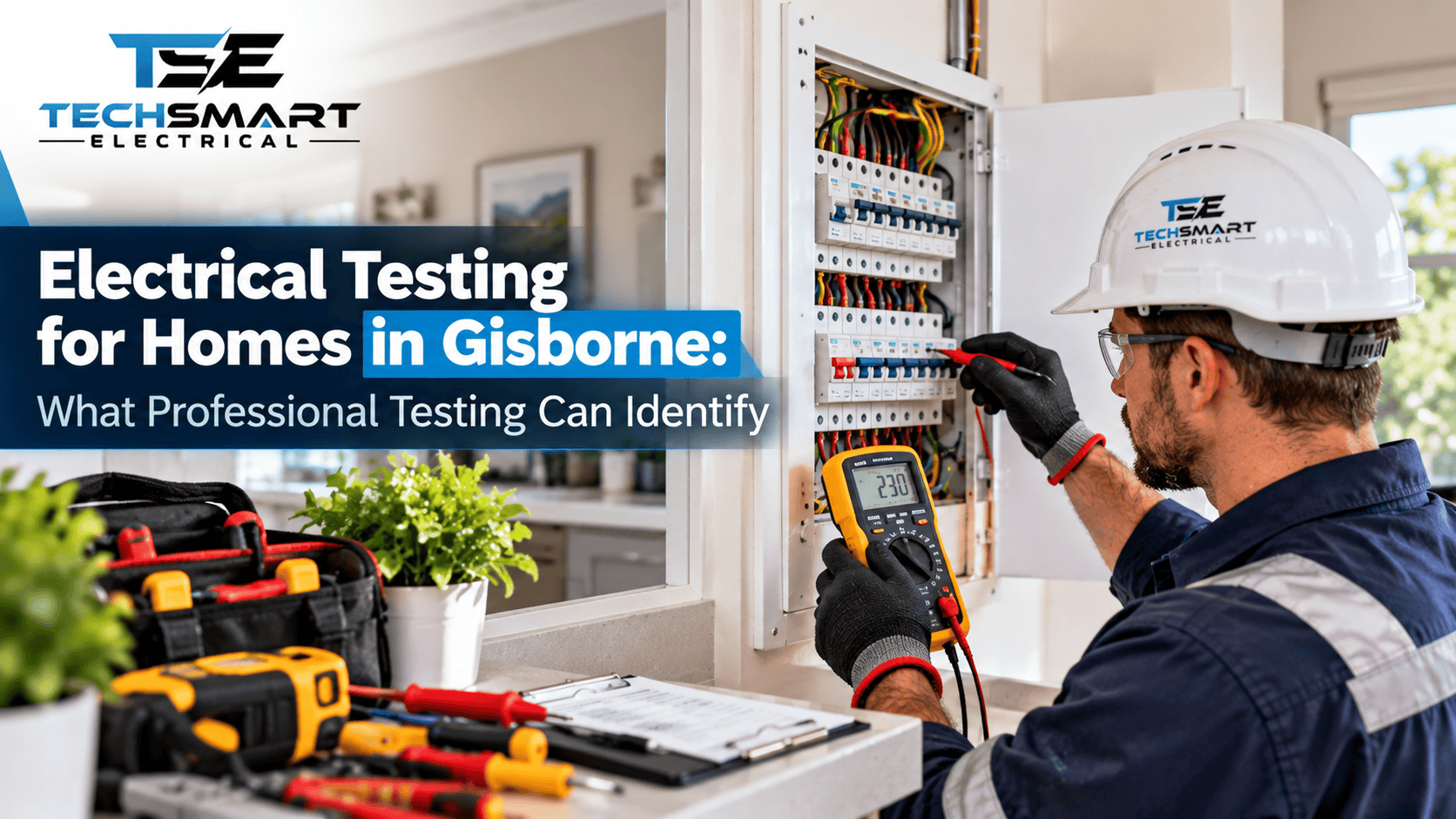
Electrical problems are not always easy to spot. A light may work normally while a connection behind the switch is deteriorating. A circuit breaker may trip occasionally without revealing the exact cause. Even a home with modern appliances can have hidden wiring issues that need professional attention.
For homeowners, electrical testing Gisborne services can help identify potential electrical faults, assess selected components and provide a clearer understanding of an installation’s condition. Professional testing is particularly useful when a property has older wiring, has undergone renovations or experiences recurring electrical problems.
An electrical safety inspection Gisborne homeowners arrange with a qualified professional can also help identify concerns involving electrical accessories, protective devices, wiring condition and circuit performance. The exact findings depend on the tests performed, the property’s configuration and the areas that can be safely accessed.
Techsmart Electrical recognises the importance of informed electrical maintenance. Understanding what professional testing involves can help homeowners recognise warning signs, ask better questions and make practical decisions about repairs.
Electrical installations experience wear and tear over time. Connections can deteriorate, insulation can become damaged, and additional appliances can increase demand on existing circuits. Previous renovations may also introduce changes that need to be assessed.
In Gisborne, homeowners may live in properties with different construction styles, electrical systems and maintenance histories. An older home that has received several upgrades, for example, may contain a combination of original components and newer installations.
Professional electrical testing helps assess relevant parts of the system instead of relying solely on appearance or everyday performance.
Testing may help identify:
Not every assessment includes all these checks. A qualified electrician determines the appropriate testing methods according to the reported symptoms, installation and relevant safety requirements.
Professional electrical testing generally combines an initial discussion, a visual examination and appropriate instrument-based checks.
Before testing begins, the electrician may ask whether the home has experienced flickering lights, recurring circuit trips, unusual sounds or changes in appliance performance.
Information about previous repairs, renovations and electrical upgrades can also help narrow down potential problems.
For example, if a circuit started tripping after a new appliance was installed, the electrician may investigate the appliance, circuit loading and associated wiring rather than assuming that the circuit breaker itself is faulty.
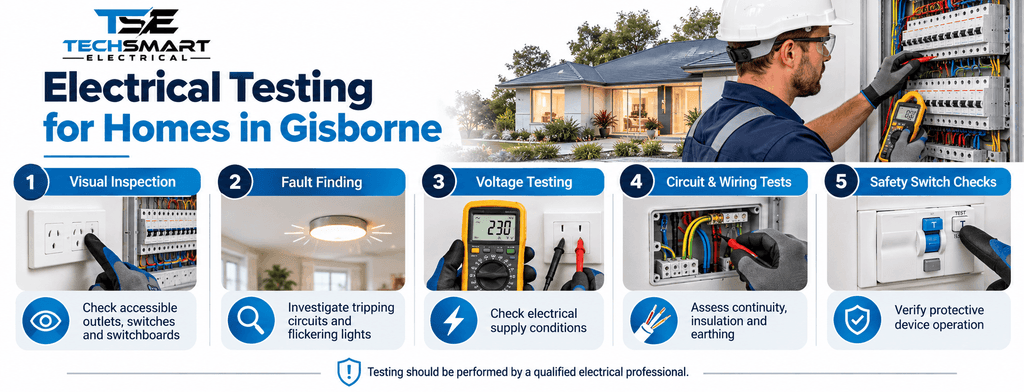
A visual inspection may cover accessible switchboards, power points, switches, wiring and other relevant equipment.
The electrician looks for visible damage, discolouration, signs of overheating, deteriorated insulation and other conditions that may warrant further assessment.
However, a visual inspection cannot establish the condition of every concealed cable or internal connection. Additional testing may be needed to investigate particular concerns.
Different instruments measure different electrical characteristics. A voltage tester measures electrical potential difference, while continuity and insulation resistance tests assess other aspects of a circuit.
The electrician selects the appropriate method for the problem being investigated. Some tests require circuits to be isolated, and sensitive equipment may need to be disconnected or protected.
After testing, the homeowner should receive a clear explanation of the findings, recommended corrective work and any limitations.
A useful report distinguishes confirmed defects from potential concerns that need further investigation. It should not suggest that every part of the installation has been verified if some areas were inaccessible or outside the agreed scope.
Fault finding involves investigating electrical symptoms to determine their underlying cause. Several different problems can produce similar symptoms, which is why a systematic diagnostic process is important.
A circuit breaker may trip because of an overloaded circuit, a short circuit, a faulty appliance or another electrical defect.
Repeatedly resetting the breaker without investigating the cause can leave the underlying problem unresolved. An electrician can assess the circumstances and perform suitable tests to determine the next steps.
Occasional changes in brightness may have different explanations, but persistent flickering or significant dimming deserves attention.
Possible causes include loose connections, circuit loading, defective components or supply-related problems. Testing helps establish which explanation is supported by the evidence.
A burning smell, visible discolouration or unusual heat around electrical equipment may indicate overheating or another serious problem.
Stop using the affected equipment if it is safe to do so, keep people away and seek urgent professional assistance. If there is smoke, fire or immediate danger, contact emergency services.
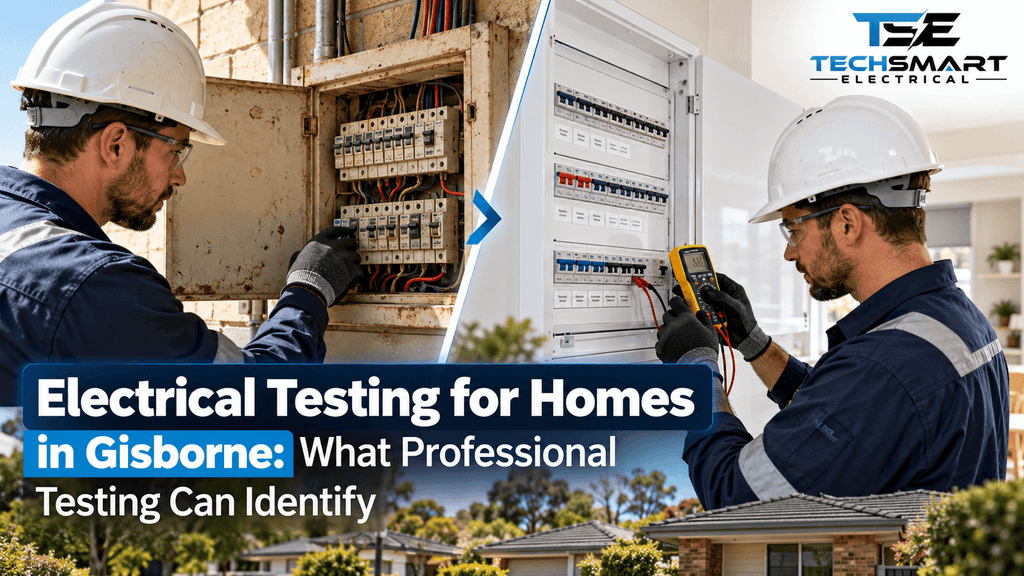
Imagine a homeowner notices that the power trips whenever the washing machine operates.
The problem could involve the appliance, the outlet, the circuit wiring or a protective device. A qualified electrician can investigate the reported conditions, isolate the relevant equipment where necessary and perform appropriate tests.
The results help determine whether the appliance needs attention, the circuit requires repair or further investigation is necessary.
This approach avoids unnecessary guesswork and helps ensure that corrective work addresses the actual problem.
Voltage testing measures the electrical potential difference between selected points in a circuit. It helps determine whether the measured supply conditions are consistent with the expected operating requirements.
Depending on the circumstances, voltage testing may help investigate:
For instance, if lights dim noticeably when a high-demand appliance starts, an electrician may measure the relevant voltage conditions and investigate the circuit, connections and supply.
A single normal reading does not establish that an entire electrical installation is safe. Wiring insulation, earthing and protective devices require their own appropriate assessments.
Homeowners should not attempt to test live circuits themselves because doing so can expose them to electric shock.
Circuit testing helps assess whether selected parts of an electrical installation are connected correctly and whether relevant protective measures function as intended.
Continuity testing checks whether an intended electrical path is complete. It can help identify broken conductors, open connections or other interruptions in a circuit.
The results must be interpreted according to the circuit design because switches and other components may intentionally interrupt an electrical path.
Insulation resistance testing assesses the resistance between selected conductors or between conductors and earth under specified test conditions.
Unsatisfactory results may indicate deteriorated insulation, moisture-related concerns or other issues requiring investigation. Connected equipment can also influence measurements, so the correct procedure is important.
The test provides information about the insulation being assessed but cannot guarantee that every concealed cable is free from defects.
Earthing and bonding help support electrical safety by providing appropriate paths for fault current and reducing certain electrical risks.
Polarity checks help establish whether relevant conductors are connected as intended. Testing may reveal incorrect connections or other conditions requiring corrective work.
These checks can be particularly useful when assessing older installations or investigating electrical work whose history is uncertain.
Safety switches, also known as residual current devices, are designed to disconnect a circuit when they detect certain types of residual current.
They serve a different purpose from ordinary circuit breakers, which primarily protect against overcurrent conditions such as overloads and short circuits.
A professional may use appropriate test equipment to assess the operation and performance of an RCD. Its test button provides a basic functional check but does not replace instrument-based testing where that testing is required.
The condition of wiring is an important consideration when assessing a home’s electrical safety.
Cables can be concealed inside walls, ceilings and other building spaces. Their condition cannot always be established through a visual inspection, and some problems require targeted investigation.
Homeowners should seek professional advice when they notice:
These signs do not all have the same cause, but they should not be ignored when persistent or accompanied by other warning signs.
Some wiring defects can be detected through suitable electrical measurements without opening walls. However, testing may not reveal the exact location or physical condition of every concealed cable.
If the results indicate a potential defect, the electrician may recommend further diagnostic work or targeted access to confirm the cause.
A responsible assessment explains these limitations clearly rather than promising that every hidden problem can be identified during a routine inspection.
An electrical assessment can be useful at several stages of homeownership. The appropriate timing depends on the installation’s condition, its history and the applicable requirements.
A general building inspection does not necessarily include comprehensive electrical testing.
If you are considering an older property, particularly one with limited electrical records, a separate assessment may help identify defects and areas that require further investigation.
The findings can inform decisions about maintenance, renovation planning and repair priorities.
Adding lighting, power points, heating equipment or other electrical loads can affect existing circuits.
Discuss planned changes with an electrician before work begins. Appropriate testing and any required inspections or certification should be completed in accordance with applicable Victorian requirements.
Recurring faults, unexplained flickering and repeated circuit trips are reasons to investigate the installation rather than repeatedly resetting protective devices.
An electrician can assess the symptoms and recommend tests based on the circumstances.
Victorian rental properties have specific electrical safety obligations. Under applicable rental minimum standards, rental providers must arrange electrical safety checks of electrical installations and fittings at least every two years.
Landlords should verify the current requirements and ensure that checks are completed by an appropriately qualified person. A general electrical assessment should not automatically be assumed to satisfy every legal obligation.
Some electrical defects do not immediately affect everyday operation. A component may continue working even when its insulation, connections or protective measures require attention.
Better approach: Consider the installation’s history, warning signs and relevant testing results rather than relying on whether electrical equipment appears to work.
A breaker that trips repeatedly may be responding to an actual electrical problem. Replacing it without identifying the cause may not resolve the underlying condition.
Better approach: Have the affected circuit investigated by a qualified professional.
Visible components can reveal warning signs, but concealed wiring may require additional testing or targeted investigation.
Better approach: Ask which components were assessed, what tests were performed and whether any limitations remain.
Two quotes may cover different scopes of work. A low price does not necessarily mean poor quality, and a high price does not automatically mean more comprehensive testing.
Better approach: Compare the agreed scope, testing methods, reporting arrangements and relevant qualifications before booking.
Choosing an appropriately qualified professional is an important part of maintaining electrical safety.
When comparing a Gisborne Electrician, consider the person’s relevant licensing or registration, residential electrical experience and ability to explain technical findings clearly.
Before booking, ask:
Techsmart Electrical is the brand homeowners can contact to discuss their residential electrical concerns and determine what testing or investigation may be appropriate. Confirm the specific services, availability and reporting arrangements directly before making an appointment.
The aim is to obtain a clear understanding of the installation and any identified issues, rather than making assumptions based on the property’s age or appearance.
Homeowners can make an assessment more useful by preparing a few details in advance.
Do not remove switchboard covers, handle exposed wiring or attempt live electrical measurements to prepare for an appointment.
Electrical testing helps homeowners understand the condition of their electrical installation, investigate recurring faults and identify concerns that may require corrective work.
For Gisborne residents, arranging appropriate testing can be especially useful before purchasing an established property, after electrical modifications or when warning signs appear.
An electrical testing Gisborne homeowners arrange should have a clearly defined scope, appropriate testing methods and transparent reporting. The results should explain confirmed defects, potential concerns and any limitations.
Techsmart Electrical encourages homeowners to take electrical warning signs seriously and seek qualified advice when needed. A practical, evidence-based assessment can help you prioritise repairs and make informed decisions about maintaining your home’s electrical safety.
There is no single interval suitable for every owner-occupied property. The appropriate frequency depends on the home’s condition, electrical history, previous modifications and any warning signs. Rental properties are subject to specific Victorian electrical safety-check obligations, including checks at least every two years under applicable requirements.
If you are unsure when the installation was last assessed, discuss its circumstances with a qualified electrician.
Depending on the tests performed, an assessment may identify wiring defects, insulation deterioration, continuity problems, incorrect polarity, certain earthing issues, abnormal voltage readings and problems with protective devices.
Some faults require further investigation, and inaccessible areas may remain unverified. Ask the electrician to explain what the findings establish and what additional work may be needed.
It can be particularly valuable for established properties with older wiring, previous renovations or limited electrical documentation.
A specialised electrical assessment can identify concerns that may not be covered by a general building inspection. The findings can help buyers understand potential repairs and plan future electrical work.
Certain wiring problems can be identified through appropriate tests performed at accessible points. However, those tests may not establish the exact physical location of a fault or reveal the condition of every concealed cable.
Further testing or targeted access may be required. The electrician should explain any uncertainty before recommending additional work.
Do not repeatedly reset the device without investigating the cause, and never bypass or disable it. A faulty appliance, moisture or a wiring defect may be responsible.
Arrange professional assessment. If you notice smoke, sparks, burning smells or overheating, keep away from the affected equipment and seek urgent assistance. Contact emergency services if there is immediate danger.
Techsmart Electrical is a locally owned company serving Melbourne and the surrounding areas. As leading specialists for commercial, industrial and residential electrician services, we prioritize customer satisfaction.


We are preferred electricians for Beacon Lighting and with that comes many bonuses for our customers. By using Techsmart Electrical as your preferred electrician, we can provide you with up to 20% off RRP of everything in store at Beacon Lighting, extended warranties on certain items and even free lighting design consultations.
Our team works closely alongside our home store in Taylors Lakes to deliver the best possible outcome for all installations. From installing one ceiling fan to wiring an entire home, Techsmart Electrical provides 100% satisfaction guarantee.
Contact us today to arrange your next installation.
Techsmart Electrical has always provided dependable and cutting-edge electrical contracting services and installations. Our qualified electricians offer services that are intended to support Melbourne businesses in growing and to give homeowners complete peace of mind.
It is entirely up to you where you want more power outlets in your home. Techsmart Electrical can install them wherever you need them. It's possible that all you need is to change your power outlets, which is a regular request. Even your outdated power sockets can be replaced with fresh models by our team in order to give your house the finishing touches.
With several years of experience, Techsmart Electrical’s licenced electricians can design and install any power point system, whether it's for a newly constructed home or an existing one. Call us and schedule a time for your power socket installation.












Techsmart Electrical is a Melbourne based electrical company. We understand the importance of top-quality workmanship, service and safety. With a professional approach, we are always ready to provide you with Master Electricians to deliver prompt electrical services for any situation.