

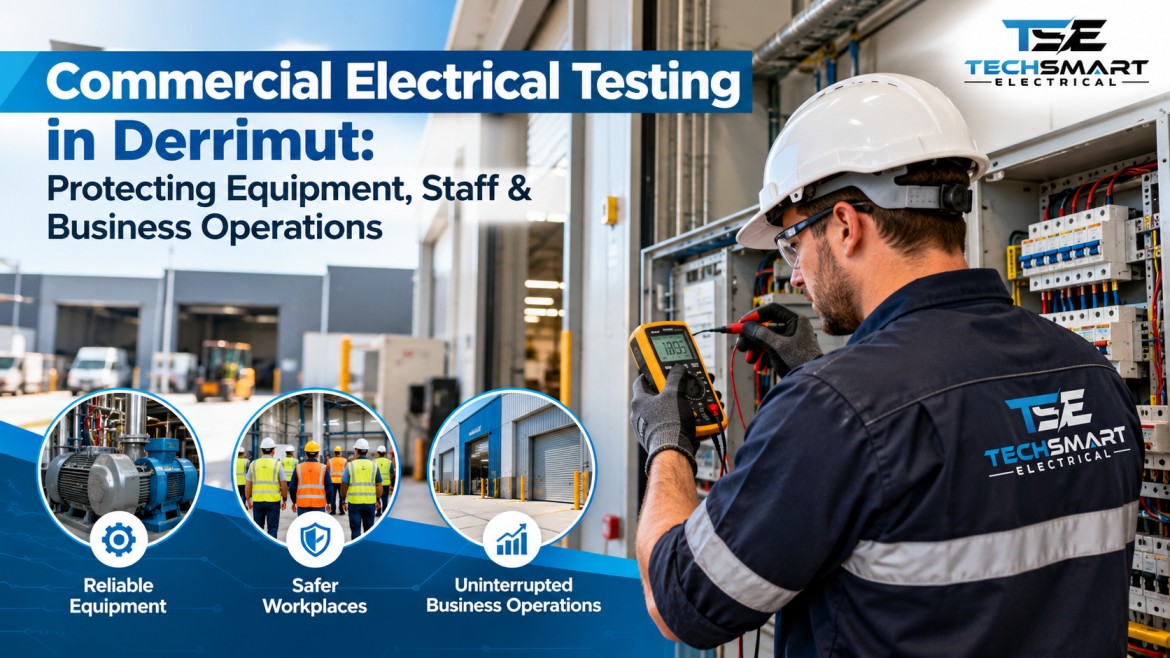
Electrical problems in a commercial building rarely announce themselves at a convenient time. A production machine may stop working halfway through an order, a circuit breaker may trip repeatedly during busy hours, or an employee may notice a damaged power lead near a workstation. These issues can affect staff safety, delay work, and create unexpected repair costs.
For warehouses, factories, workshops, offices, and retail premises, commercial electrical testing Derrimut is an important part of maintaining a safe and reliable workplace. Regular inspections help identify deterioration, loose connections, damaged equipment, and other potential hazards before they develop into more serious problems.
Effective workplace electrical safety testing Derrimut should go beyond checking whether equipment switches on. It should consider how electrical systems are used, how much load they carry, the condition of protective devices, and whether the business has a practical plan for addressing faults.
This guide explains what commercial electrical testing involves, which systems deserve attention, how testing supports workplace safety, and how businesses can plan inspections without unnecessary disruption.
Derrimut has a strong industrial and commercial presence, with businesses relying on electrical equipment for manufacturing, warehousing, logistics, administration, and daily operations. In these environments, electricity supports everything from lighting and computer systems to compressors, conveyors, machinery, and refrigeration.
When an electrical system is poorly maintained, the consequences can extend beyond a single faulty appliance.
Common risks include:
For example, consider a warehouse where several high-demand devices operate on the same circuit. If the circuit is regularly overloaded, a protective device may trip and interrupt work. Repeatedly resetting it without investigating the cause does not solve the underlying problem. A qualified electrician can assess the load, inspect the circuit, and determine whether a fault, unsuitable circuit arrangement, or other issue needs attention.
This is where commercial electrical testing becomes valuable. It provides information about the condition of electrical equipment and installations, allowing business owners to make informed decisions about repairs, upgrades, and ongoing maintenance.
Commercial electrical testing is a broad term covering different inspection and testing activities. The exact scope depends on the building, the equipment installed, the operating environment, and the risks identified during a site assessment.
Portable tools, extension leads, plug-in appliances, and other electrical equipment can deteriorate through regular use. Dust, vibration, moisture, heat, rough handling, and damaged cables can increase the risk of electrical failure.
A suitable inspection and testing program may include:
Testing and tagging is particularly relevant where portable electrical equipment is exposed to conditions that could cause damage. However, the appropriate testing frequency depends on the equipment, workplace environment, applicable requirements, and relevant standards.
A test tag is not a guarantee that equipment remains safe indefinitely. A lead damaged the day after testing must be removed from service immediately, regardless of its tag.
A commercial installation includes fixed wiring, lighting circuits, socket outlets, distribution boards, and other electrical infrastructure.
Depending on the reason for the assessment, testing may involve checking earthing arrangements, insulation resistance, polarity, circuit connections, and the operation of protective devices. The tests required depend on the installation and the work being performed.
In Victoria, electrical installation work must be tested in accordance with the applicable requirements, including relevant provisions of AS/NZS 3000, the Australian/New Zealand Wiring Rules. Energy Safe Victoria provides guidance on the testing required for electrical installation work.
Businesses should distinguish between routine equipment testing and an assessment of the fixed electrical installation. One does not automatically replace the other.
Residual current devices (RCDs), commonly called safety switches, are designed to disconnect power when they detect certain electrical leakage conditions. Circuit breakers protect circuits against specified overcurrent conditions, including overloads and short circuits.
A suitable inspection may assess whether protective devices are appropriate for the circuit and whether their operation meets the applicable requirements.
A breaker that trips repeatedly should not be treated as a nuisance that can simply be reset. The cause needs to be investigated by a suitably qualified electrician.
The switchboard is a central part of a commercial property’s electrical distribution system. It distributes electricity to different circuits and houses protective devices that help manage electrical risks.
A damaged, poorly maintained, or unsuitable switchboard can affect the reliability of an entire workplace.
The scope depends on the installation and the condition of the equipment, but an assessment may include:
Some defects cannot be confirmed through a visual inspection alone. Additional electrical tests or specialist diagnostic methods may be necessary.
Switchboard covers should never be removed by unqualified staff. Internal inspection and testing must be planned and performed by appropriately licensed electrical workers using suitable safety procedures.
An inspection may be appropriate when:
For example, a manufacturing business that installs an additional machine may increase the electrical demand on its existing circuits. An electrician can assess the new load and determine whether the supply, circuit protection, and distribution arrangements remain suitable.
The goal is not to replace a switchboard unnecessarily. It is to identify genuine risks and recommend proportionate action based on the condition of the installation.
Equipment circuits supply power to individual machines, appliances, lighting systems, and other electrical loads. Their design and condition affect both operational reliability and electrical safety.
In warehouses and factories, electrical demand can vary considerably throughout the day. Motors may draw higher current during startup, machinery may operate for extended periods, and multiple devices may run simultaneously.
If a circuit is unsuitable for its intended load, the business may experience repeated tripping, overheating, equipment interruptions, or other faults.
Overloaded circuits: Too many loads or excessive demand can cause protective devices to operate. An electrician should assess the circuit rather than simply replacing a breaker with one of a higher rating.
Loose or deteriorated connections: Poor connections can create resistance and heat. Depending on the circumstances, specialist testing may help identify developing problems.
Damaged insulation: Cable deterioration can increase the risk of electric shock, short circuits, and faults.
Incorrect circuit arrangements: Equipment additions or changes in how a space is used may make existing circuit arrangements unsuitable.
Inadequate circuit identification: Unclear labels can delay fault investigation and make safe isolation more difficult.
A practical inspection should consider what each circuit supplies, how the equipment operates, and whether any changes have occurred since the installation was last assessed.
Businesses should also avoid relying on extension leads as a permanent substitute for appropriately designed fixed electrical infrastructure. Where additional outlets or dedicated circuits are needed, a licensed electrician can assess the safest solution.
Electrical faults are not always dramatic. Some begin with small warning signs that become more noticeable as equipment deteriorates or operating demands increase.
Recognising these signs early can help businesses arrange appropriate inspections before a minor issue develops into a major interruption.
Watch for:
These symptoms do not all have the same cause. For instance, flickering lights may indicate a problem with a fitting, a circuit, or another part of the electrical system. An inspection is needed to establish the cause.
If equipment shows signs of damage, stop using it and isolate it from service where this can be done safely. Do not touch exposed conductors or attempt to investigate a live electrical fault. If there is smoke, fire, or an immediate danger, keep people away and contact emergency services as appropriate.
Preventive testing can help identify certain defects before they lead to unexpected failures. It cannot eliminate every breakdown, but it gives businesses a clearer picture of equipment condition and potential risks.
Consider a distribution business that depends on electric pallet-handling equipment, computers, lighting, and charging stations. If inspections identify damaged leads or a developing circuit problem, the business may be able to schedule corrective work during a quieter period rather than dealing with an avoidable interruption during peak operations.
The value comes from acting on findings, not simply completing a test. A report that identifies a serious defect must lead to appropriate corrective action.
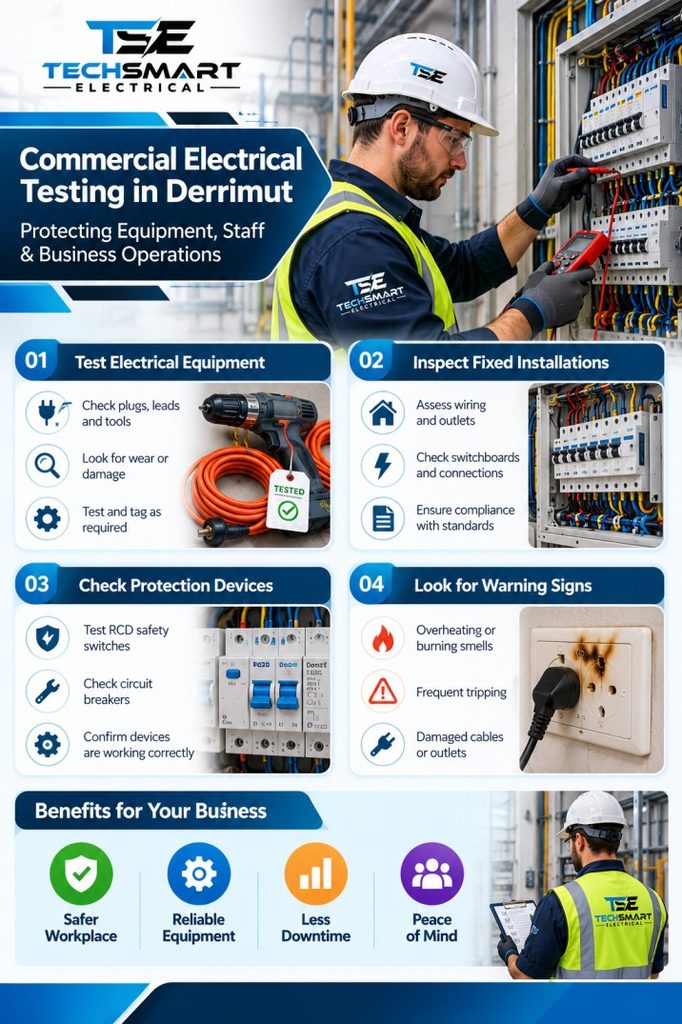
Electrical safety is a shared workplace responsibility, but employers and business operators must take reasonable and legally required steps to manage risks under the applicable Victorian occupational health and safety framework.
WorkSafe Victoria advises employers to maintain safe systems of work covering the inspection, testing, and maintenance of electrical equipment and installations under their management or control. It also highlights the importance of removing damaged equipment from service and ensuring that repairs are carried out by competent people.
A practical workplace electrical safety testing Derrimut program should form part of a broader risk management system.
1. Identify electrical equipment and hazards. Maintain a list of relevant appliances, portable tools, fixed equipment, and electrical installations.
2. Establish suitable inspection intervals. Consider equipment type, workplace conditions, frequency of use, previous failures, applicable regulations, and relevant standards.
3. Train employees to recognise problems. Staff should know how to report damaged leads, unusual smells, overheating, and other warning signs.
4. Remove defective equipment from service. Make it clear that faulty equipment must not be used until it has been appropriately assessed and repaired or replaced.
5. Keep accurate records. Record inspections, test results, identified defects, repairs, and outstanding corrective actions.
6. Review controls after changes or incidents. New machinery, renovations, changed work processes, and electrical incidents may require a fresh risk assessment.
Workplace safety also involves consultation. Employees and contractors should have a clear way to raise concerns and understand who is responsible for responding.
Useful records may include:
Recordkeeping requirements depend on the circumstances and applicable obligations. A well-maintained register helps a business demonstrate that it is actively managing identified risks rather than relying on memory or scattered paperwork.
Testing helps identify problems, while maintenance addresses them. Both activities are necessary for a reliable electrical safety program.
commercial electrical maintenance Derrimut should be planned around the building’s electrical infrastructure, equipment demands, operating conditions, and previous maintenance history.
A maintenance program may include:
Not every business needs the same maintenance schedule. A relatively low-risk office with limited portable equipment has different needs from a manufacturing facility with machinery, vibration, dust, and high electrical demand.
Start by identifying equipment and electrical systems that are critical to operations. Discuss suitable inspection windows with the electrical contractor and relevant site personnel.
Where an inspection or repair requires an outage, plan the work around production schedules, warehouse movements, tenant access, and other site activities.
Before work begins, clarify:
This approach makes maintenance more predictable without compromising safety. Where a dangerous defect is identified, however, safety takes priority over keeping equipment operating.
Businesses seeking to strengthen their maintenance planning can work with TechSmart Electrical to discuss their commercial electrical requirements and the appropriate scope of testing for their premises.
Even businesses with an established maintenance routine can overlook important details.
A tag records the outcome of an inspection and test at a particular time. Equipment can be damaged afterward, so employees should still inspect leads, plugs, and appliances before use.
Repeatedly resetting a breaker can leave the underlying fault unresolved. If a breaker continues to trip, stop relying on repeated resets and arrange a suitable electrical assessment.
Testing identifies defects or assesses electrical safety. Maintenance involves corrective work and other actions needed to keep systems in suitable condition. A testing program without follow-up can leave known hazards unresolved.
Testing frequency should reflect the equipment, environment, usage, risk, and applicable requirements. A dusty industrial workshop may need a different approach from a typical office.
A damaged plug, unusual smell, or warm outlet may appear minor, but it should not be ignored. Prompt reporting allows the issue to be assessed before the risk increases.
When equipment is replaced, a circuit is modified, or a defect is repaired, update the relevant records. Outdated information can make future inspections and fault diagnosis less effective.
For a more effective testing and maintenance program, consider the following practical measures.
Prioritise by risk. Give attention to equipment used in demanding environments, critical production systems, and areas where an electrical failure could expose people to serious harm.
Investigate recurring faults. A repeated failure may indicate an underlying problem rather than an isolated defect. Look for patterns in maintenance and testing records.
Keep access clear. Switchboards and isolation points should remain accessible, appropriately identified, and free from stored materials.
Use suitably qualified professionals. Testing and tagging of equipment and electrical installation work are different tasks with different competency requirements. Engage a person with the appropriate competence for the work involved, and a licensed electrician for electrical installation work and repairs where required.
Review changes before connecting new equipment. Machinery upgrades, additional appliances, and changes in production can affect electrical demand. Have the existing installation assessed where necessary.
Close out every serious finding. Assign responsibility for corrective work, record the outcome, and confirm that equipment is safe before returning it to service.
Make reporting straightforward. Employees should know whom to contact when equipment is damaged or an electrical hazard is suspected. A simple reporting process can help prevent unsafe equipment from remaining in use.
Reliable electrical systems are essential for keeping commercial workplaces safe, productive, and operational. Regular inspections, appropriate testing, timely repairs, and effective recordkeeping help businesses identify potential hazards and make better maintenance decisions.
For Derrimut businesses, the most effective approach is to match the testing program to the workplace rather than rely on a generic checklist. Consider the condition of the installation, the demands placed on equipment, the risks to employees, and the consequences of unexpected downtime.
commercial electrical testing Derrimut should be treated as an ongoing safety and maintenance responsibility, not simply a task to complete when a problem occurs. By combining workplace electrical safety testing Derrimut with practical risk controls and planned maintenance, businesses can take a more proactive approach to electrical safety.
If your premises require an electrical safety review or a better-organised testing schedule, TechSmart Electrical can be a starting point for discussing the scope of work, the relevant risks, and the records your business needs. The priority is to identify genuine issues, address them appropriately, and maintain a safer working environment over time.
Commercial electrical testing involves inspecting and testing electrical equipment, circuits, protective devices, or fixed installations to assess their condition and identify potential hazards. The exact scope depends on the workplace and the purpose of the assessment. It may include portable equipment testing, switchboard assessments, circuit testing, or checks following electrical installation work.
It helps identify certain electrical hazards before they cause injury, equipment damage, fires, or business interruptions. It also supports a workplace’s broader risk management and maintenance processes. Testing should be combined with visual inspections, employee reporting, appropriate repairs, and accurate records.
There is no single interval suitable for every business or every item of equipment. The appropriate frequency depends on the equipment, how it is used, environmental conditions, risk factors, applicable legal requirements, and relevant standards, including AS/NZS 3760:2022 where applicable. Businesses should establish a suitable schedule rather than assume that every appliance requires annual testing.
The required qualifications depend on the task. A suitably competent person may perform certain in-service inspections and tests of electrical equipment, while fixed electrical installation testing, electrical repairs, and other regulated electrical work require appropriately licensed professionals as applicable. Businesses should confirm the provider’s competence and authorisation before arranging work.
The business should follow the recommendations and urgency stated in the findings. Unsafe equipment should be removed from service, clearly identified, and prevented from being used until it has been appropriately assessed and repaired or replaced. Installation faults should be addressed by a suitably licensed electrician. Keep a record of the defect, the corrective action, and the outcome before affected equipment returns to service.
Techsmart Electrical is a locally owned company serving Melbourne and the surrounding areas. As leading specialists for commercial, industrial and residential electrician services, we prioritize customer satisfaction.

We are preferred electricians for Beacon Lighting and with that comes many bonuses for our customers. By using Techsmart Electrical as your preferred electrician, we can provide you with up to 20% off RRP of everything in store at Beacon Lighting, extended warranties on certain items and even free lighting design consultations.
Our team works closely alongside our home store in Taylors Lakes to deliver the best possible outcome for all installations. From installing one ceiling fan to wiring an entire home, Techsmart Electrical provides 100% satisfaction guarantee.
Contact us today to arrange your next installation.
Techsmart Electrical has always provided dependable and cutting-edge electrical contracting services and installations. Our qualified electricians offer services that are intended to support Melbourne businesses in growing and to give homeowners complete peace of mind.
It is entirely up to you where you want more power outlets in your home. Techsmart Electrical can install them wherever you need them. It's possible that all you need is to change your power outlets, which is a regular request. Even your outdated power sockets can be replaced with fresh models by our team in order to give your house the finishing touches.
With several years of experience, Techsmart Electrical’s licenced electricians can design and install any power point system, whether it's for a newly constructed home or an existing one. Call us and schedule a time for your power socket installation.












Techsmart Electrical is a Melbourne based electrical company. We understand the importance of top-quality workmanship, service and safety. With a professional approach, we are always ready to provide you with Master Electricians to deliver prompt electrical services for any situation.