

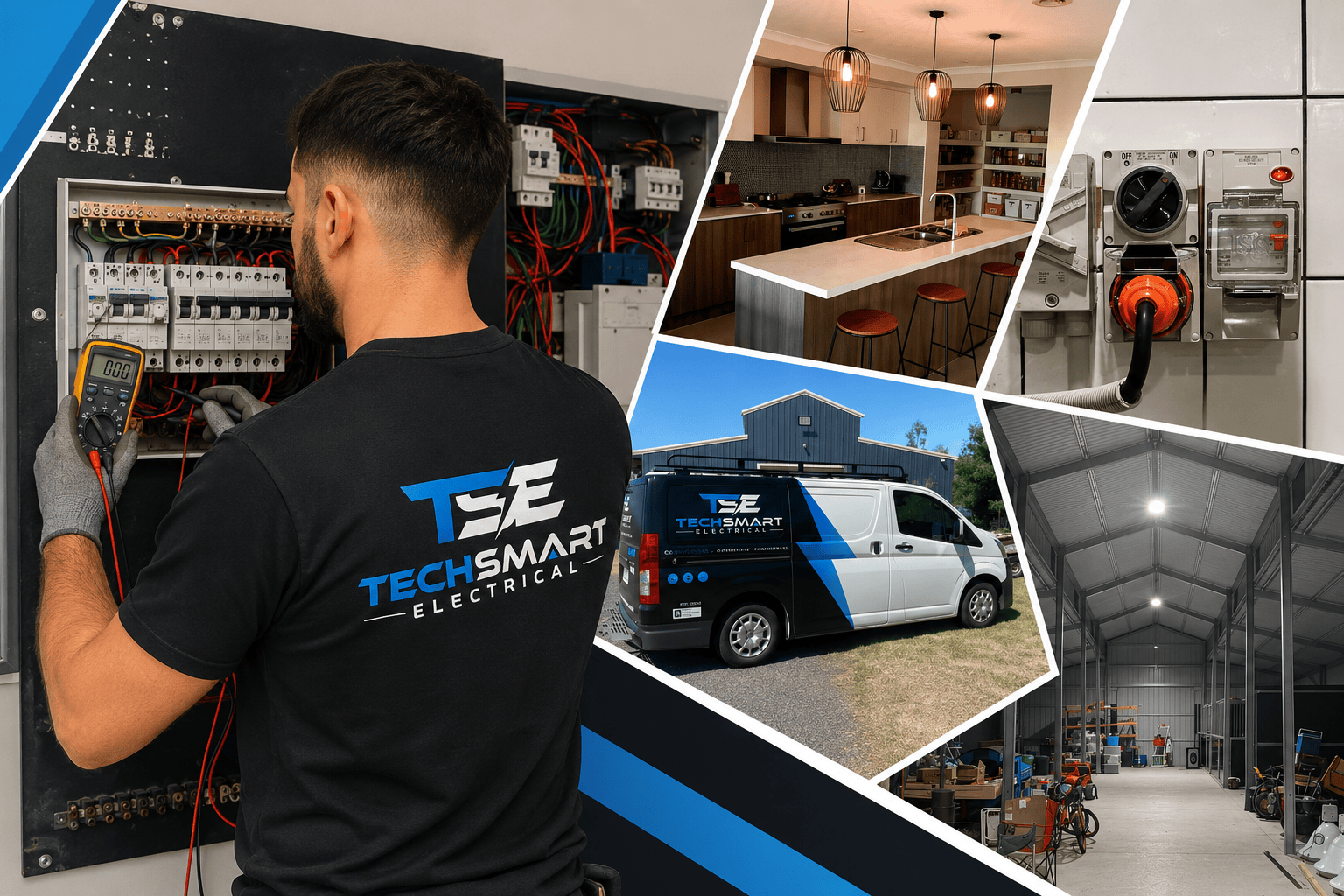
A growing home rarely stays electrically the same for long. A new house may begin with a relatively modest load, but within a few years it can have extra televisions, computers, air conditioners, kitchen appliances, outdoor lighting, EV charging, home offices, heat pumps and other high-demand equipment.
That growth can expose weaknesses that were not obvious when the home was first built.
If you are dealing with repeated circuit trips, flickering lights, warm power points, unexplained outages or a switchboard that seems to struggle whenever several appliances operate together, it is worth having the system assessed rather than simply resetting the breaker each time.
An emergency electrician in Thornhill Park can investigate electrical problems that require prompt attention, while a planned inspection can help identify issues before they become disruptive or dangerous.
This is particularly important for households adding new electrical loads. Electrical fault finding Thornhill Park services can help trace the source of intermittent faults, nuisance tripping, and other problems that are not always visible from the outside.
Whether you have recently moved into a new home, are renovating, or are simply adding more electrical equipment as your family grows, understanding the basics of electrical safety can help you make better decisions.
New construction does not automatically mean every future electrical requirement has been anticipated.
A home’s original electrical installation is designed around the expected requirements at the time it is built. Household electricity use can then change significantly.
Common warning signs include:
One isolated trip may have a straightforward explanation, such as a faulty appliance. Repeated tripping deserves more attention.
The important question is not simply, “How do I turn the power back on?” It is, “Why did the protective device operate?”
That distinction matters because circuit protection is designed to respond to abnormal electrical conditions.
Families often add electrical equipment gradually. One year it might be a new split-system air conditioner. Later, a home office is added. Then an induction cooktop, outdoor entertaining area, workshop equipment or EV charger may increase demand again.
This is why new-home electrical safety should be considered an ongoing process rather than a one-time checklist.
A practical electrical assessment should consider:
A homeowner does not need to calculate electrical loads personally. That is where a suitably licensed electrician can assess the installation and determine whether changes are appropriate.
Consider a family that moves into a new Thornhill Park property.
Initially, the home has standard kitchen appliances, several televisions and normal lighting. Over the next few years, the family adds a home office, additional refrigeration, an air conditioner, outdoor lighting, and an EV charger.
Nothing was necessarily “wrong” with the original installation. The household simply changed.
The right approach is to reassess the electrical system as the home’s demands evolve.
Electrical faults are not always obvious.
A circuit that trips once may be relatively easy to investigate. An intermittent fault can be much more challenging because the problem may disappear before an electrician arrives.
This is where structured electrical fault finding Thornhill Park work becomes valuable.
A licensed electrician can investigate the symptoms, isolate affected circuits, and use appropriate testing procedures to identify possible causes.
Potential sources include:
Simply replacing a breaker without identifying why it operated does not necessarily solve the underlying problem.
If a breaker or RCD repeatedly trips, avoid repeatedly resetting it in an attempt to keep the circuit running.
Instead:
The safest response depends on the circumstances.
Not every electrical inconvenience is an emergency.
However, some situations should receive prompt professional attention.
Contact an emergency electrician in Thornhill Park when there are serious signs such as:
If there is an immediate risk of fire, electric shock or other danger, prioritise personal safety and contact the appropriate emergency services.
For less urgent issues, booking a planned inspection can often provide a more comprehensive opportunity to diagnose the problem.
Electrical work should be performed and assessed by appropriately licensed electrical professionals.
A licensed electrician in Thornhill Park can assess electrical installations, identify defects and determine what work may be necessary under applicable Victorian requirements.
This is especially important when work involves:
DIY electrical work can create serious safety risks and may also create compliance problems.
Homeowners should also retain relevant electrical documentation and certificates provided for completed work.
Circuit protection is one of the most important parts of a domestic electrical installation.
Different protective devices perform different functions, so they should not be treated as interchangeable.
An electrical installation may include circuit breakers and residual current devices, commonly referred to as RCDs, depending on the installation and applicable requirements.
Circuit breakers primarily protect circuits against conditions such as excessive current and short circuits. RCDs are designed to disconnect electricity when they detect a residual current imbalance associated with leakage to earth.
Imagine a household adding several high-powered appliances without considering how they interact with existing circuits.
The result might be nuisance tripping or other symptoms.
Rather than assuming that a larger protective device is the answer, the electrical system needs to be assessed properly.
Increasing protection ratings without ensuring that the wiring and installation are suitable can introduce significant safety risks.
That is why switchboard capacity and circuit design should be considered together.
The switchboard is effectively the control centre for a home’s electrical distribution.
It contains protective devices that manage individual circuits and help protect the installation.
Older or heavily modified switchboards may require particular attention, especially when a home has undergone renovations or significant electrical expansion.
A qualified electrician may assess:
Having an empty position in a switchboard does not automatically mean the electrical installation has unlimited capacity.
When a homeowner says, “There is room for another breaker,” an electrician still needs to consider the broader installation.
The assessment can include supply capacity, existing demand, circuit requirements, and the suitability of the proposed equipment.
This becomes particularly relevant when installing high-demand equipment.
Some electrical problems receive attention because they are visible. Others remain hidden.
Outdoor areas are one example.
Power points, lighting, pumps and other electrical equipment exposed to weather conditions require appropriate equipment, installation methods and protection.
Bathrooms, laundries, kitchens and other areas where water and electricity may be present also require careful consideration.
Other commonly overlooked locations include:
Homeowners may gradually add tools, freezers, battery chargers and other equipment.
The electrical demand can increase considerably compared with the home’s original use.
Decks and patios often gain lighting, heaters, power points, speakers and other electrical equipment.
These additions should be planned rather than improvised with temporary connections.
Computers, monitors, printers, networking equipment and charging devices can create a surprisingly dense concentration of electrical equipment.
As children grow, rooms may acquire gaming systems, computers, televisions, chargers and other devices.
Good power point planning can reduce the temptation to overload outlets with multiple adaptors and extension leads.
Power point installation is not simply about adding as many outlets as possible.
Placement, circuit design and intended equipment should all be considered.
For example, a kitchen may require dedicated arrangements for particular appliances rather than relying on one general-purpose circuit.
A home office may benefit from well-positioned outlets that reduce cable clutter.
A garage may need appropriate provisions for equipment that draws significant power.
An electrician can assess the proposed use and determine the appropriate electrical solution.
Avoid treating extension leads and power boards as permanent substitutes for properly designed electrical outlets.
Flickering lights are sometimes dismissed as a minor annoyance.
Occasional flickering can have different causes, but persistent or unexplained flickering deserves investigation.
Potential causes can include:
The correct diagnosis depends on the circumstances.
If flickering occurs alongside buzzing, burning smells, heat, repeated tripping, or other unusual symptoms, do not ignore it.
A Thornhill Park Electrician can determine whether the issue is isolated to a fitting or connected to a broader electrical problem.
Renovations are an ideal opportunity to review electrical requirements.
Walls may be open, cabinetry may be changing and appliances may be relocated.
That makes it easier to think about electrical requirements before finishes are installed.
Before renovation work begins, consider:
This type of planning can reduce the need for awkward extensions or later modifications.
Even careful homeowners can make assumptions that create unnecessary risks.
A new installation still contains electrical components that can develop faults or be affected by later changes.
A protective device that keeps operating is providing useful information.
Repeatedly resetting it without investigation is not a substitute for fault diagnosis.
Extension leads are useful for temporary situations, but they should not replace appropriate fixed electrical installations.
A new appliance can change how a circuit is used.
A warm, discoloured, damaged, or buzzing power point should not be treated as normal.
Protection must be matched to the electrical installation. Increasing a protective rating without appropriate assessment can create dangerous conditions.
Good communication can prevent misunderstandings.
Before work starts, ask:
You do not need to understand every technical detail. A good electrical professional should be able to explain the relevant issue in plain language.
A little preparation can make fault finding more efficient.
Write down:
For intermittent faults, this information can be extremely useful.
For example, telling an electrician that a circuit only trips when an outdoor pump operates provides a much stronger starting point than simply saying, “The power keeps going off.”
One of the most useful habits for homeowners is to think about electrical systems before problems occur.
If your family is planning an extension, renovation, EV charger, workshop, outdoor entertaining area or major appliance upgrade, discuss the electrical requirements early.
Do not wait until the walls are finished to discover that the planned equipment needs a different electrical arrangement.
For new-home electrical safety, the most effective approach is usually proactive:
If you are adding a major electrical load, don’t ask only, “Can I plug it in?”
Ask, “Is the existing electrical installation designed for this equipment?”
That simple change in thinking can help homeowners avoid inappropriate DIY solutions and unnecessary electrical stress.
Electrical faults can behave differently depending on load, temperature, moisture, appliance operation, and other conditions.
That is why replacing a component based purely on symptoms can be ineffective.
Proper electrical fault finding in Thornhill Park focuses on identifying the cause rather than repeatedly treating the symptom.
For example, if an RCD trips whenever a particular appliance operates, the investigation should establish whether the appliance, circuit, wiring or another component is responsible.
That information determines what action is appropriate.
There is no universal inspection frequency that fits every property and every household.
The appropriate timing depends on the age and condition of the installation, previous electrical work, changes to household demand and any signs of problems.
Consider arranging an electrical assessment when:
For homeowners unsure about the condition of their installation, discussing the property’s circumstances with a licensed electrician is a sensible starting point.
A growing home needs an electrical system that can safely support the way the household actually lives.
New appliances, renovated rooms, home offices, outdoor spaces, and other additions can gradually change electrical demand. Meanwhile, symptoms such as repeated tripping, flickering lights, damaged outlets or unexplained outages can indicate issues that deserve professional attention.
The role of an emergency electrician in Thornhill Park is not simply to restore power when something goes wrong. Prompt electrical assistance can help address potentially hazardous faults, while planned inspections and upgrades can help homeowners make informed decisions before problems escalate.
For families in Thornhill Park, working with a suitably licensed electrician is particularly valuable when electrical requirements are changing. From switchboard assessment and circuit protection to lighting, power point installation and electrical fault finding in Thornhill Park, the goal should always be the same: a safe, functional electrical installation that matches the home’s current needs and can be sensibly planned for future changes.
Most importantly, don’t ignore electrical warning signs. If something feels unusual, sounds unusual, smells unusual or repeatedly trips, treat it as a reason to investigate rather than something to work around.
An emergency electrician generally responds to electrical situations that require prompt attention because of safety concerns, significant electrical failure or the risk of further damage. Examples can include burning smells, sparking, exposed wiring, serious faults, and repeated unexplained tripping.
Not every loss of power requires an emergency callout. If there is no immediate danger, a scheduled electrical assessment may provide more time for comprehensive diagnosis.
A breaker may trip because of excessive current, a short circuit, a faulty appliance, or another electrical problem. The exact cause cannot be determined simply from the fact that it tripped.
If the same circuit repeatedly trips, avoid repeatedly resetting it without finding the cause. Disconnecting suspected appliances where it is safe to do so and arranging assessment by a licensed electrician is a more appropriate approach.
Warning signs can include repeated tripping, visible damage, unusual heat, burning smells, buzzing, or an installation that has been significantly modified over time.
A switchboard should also be assessed when you are planning substantial electrical additions. Physical space in a switchboard does not by itself establish that additional electrical loads can safely be accommodated.
Fixed electrical work should be undertaken by an appropriately licensed electrical professional. Adding outlets involves more than attaching a wall plate; the electrician needs to consider wiring, circuit protection, load, and the applicable requirements for the installation.
If you need more outlets, explain how and where they will be used. That helps the electrician design a solution appropriate to the home’s actual needs.
Start by keeping damaged cords and electrical equipment out of use, avoiding permanent reliance on extension leads, keeping electrical equipment away from inappropriate moisture exposure and responding promptly to unusual electrical behaviour.
For larger changes, such as renovations, new appliances, workshops, outdoor areas or EV charging, have the electrical requirements assessed before installation.
A planned electrical safety review can also help identify issues that are easy to overlook during everyday life.
Techsmart Electrical is a locally owned company serving Melbourne and the surrounding areas. As leading specialists for commercial, industrial and residential electrician services, we prioritize customer satisfaction.


We are preferred electricians for Beacon Lighting and with that comes many bonuses for our customers. By using Techsmart Electrical as your preferred electrician, we can provide you with up to 20% off RRP of everything in store at Beacon Lighting, extended warranties on certain items and even free lighting design consultations.
Our team works closely alongside our home store in Taylors Lakes to deliver the best possible outcome for all installations. From installing one ceiling fan to wiring an entire home, Techsmart Electrical provides 100% satisfaction guarantee.
Contact us today to arrange your next installation.
Techsmart Electrical has always provided dependable and cutting-edge electrical contracting services and installations. Our qualified electricians offer services that are intended to support Melbourne businesses in growing and to give homeowners complete peace of mind.
It is entirely up to you where you want more power outlets in your home. Techsmart Electrical can install them wherever you need them. It's possible that all you need is to change your power outlets, which is a regular request. Even your outdated power sockets can be replaced with fresh models by our team in order to give your house the finishing touches.
With several years of experience, Techsmart Electrical’s licenced electricians can design and install any power point system, whether it's for a newly constructed home or an existing one. Call us and schedule a time for your power socket installation.












Techsmart Electrical is a Melbourne based electrical company. We understand the importance of top-quality workmanship, service and safety. With a professional approach, we are always ready to provide you with Master Electricians to deliver prompt electrical services for any situation.