

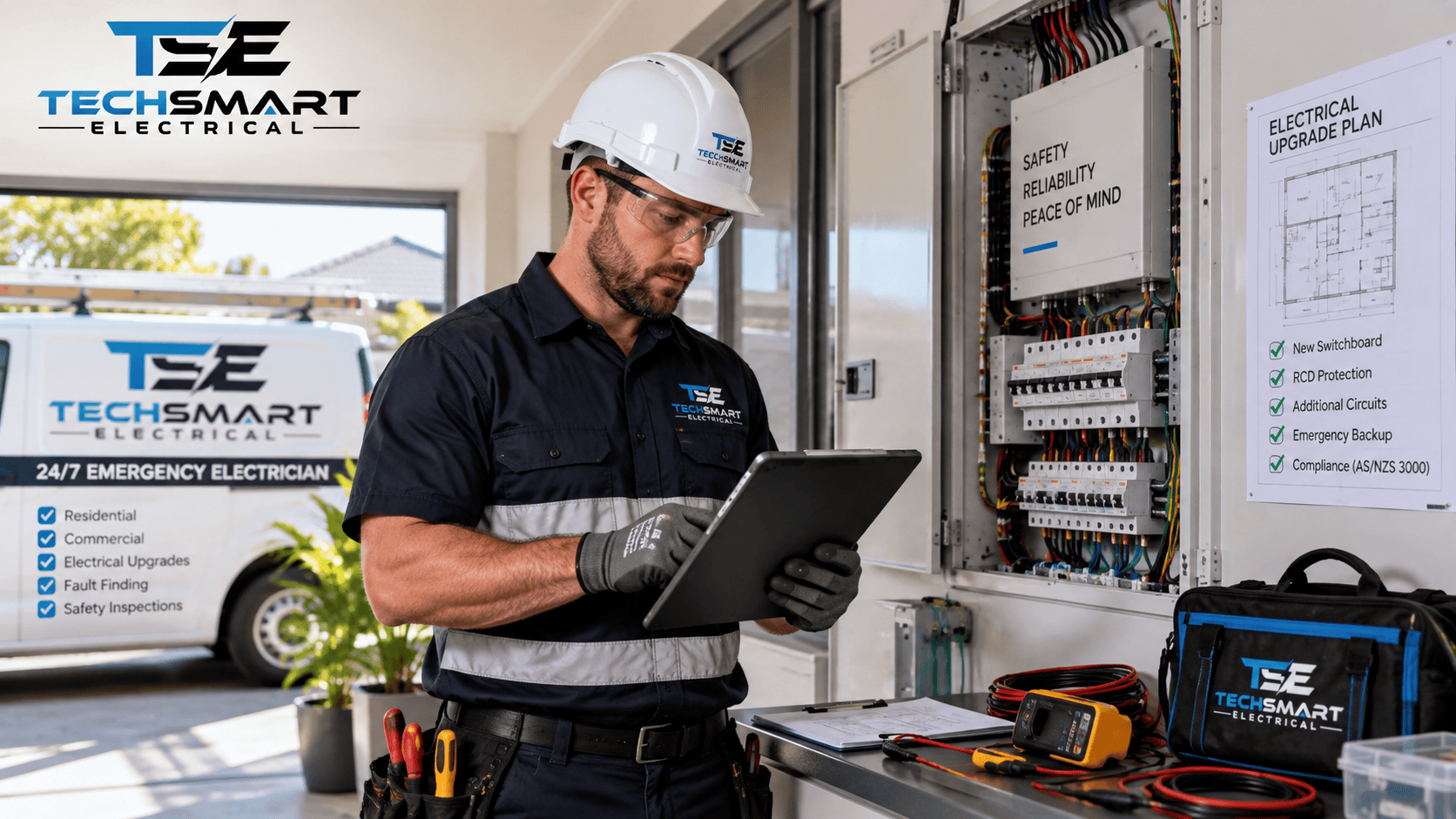
Electrical problems rarely happen at a convenient time. A flickering light may seem minor during the day, but a burning smell from a power point at night is a different situation entirely. In homes and businesses across Altona North, electrical faults can range from simple tripped circuits to wiring problems that require urgent professional attention.
Knowing what to look for can help you respond safely.
This guide explains common electrical problems involving Switchboard, Wiring, RCD protection, power outages and circuit overloads. It also explains when you should call an emergency electrician Altona North rather than attempting a DIY fix.
Whether you own a home, manage a rental property or operate a small business, understanding the warning signs can reduce electrical risks and help prevent avoidable damage.
Why Electrical Safety Matters in Altona North
Modern properties rely heavily on electricity. Heating and cooling systems, kitchen appliances, computers, lighting, hot-water systems and charging devices can all place demands on an electrical installation.
Older properties may also have electrical components that were designed for a much smaller load.
For example, a house that originally had only a refrigerator, television and basic lighting may now have:
When electrical infrastructure does not match modern demand, problems can develop.
An experienced Altona North Electrician will generally look beyond the immediate symptom. A tripping breaker, for example, is not necessarily the actual fault. It may be protecting the property from an underlying overload, short circuit or appliance problem.
That distinction matters.
Switchboard: The First Place to Look When Power Problems Occur
The switchboard is one of the most important parts of a property’s electrical system. It distributes electricity to different circuits and contains protective devices designed to reduce the risk of electrical injury, fire and equipment damage.
A modern switchboard may contain circuit breakers and RCDs, while older installations can have outdated protective equipment.
What Does a Switchboard Do?
Think of the switchboard as the control centre for the property’s electrical circuits.
Different circuits may supply:
If a fault occurs on one circuit, its protective device may disconnect that circuit rather than allowing the problem to continue.
This is why repeatedly resetting a breaker without understanding why it tripped is not good practice.
Signs Your Switchboard Needs Attention
Watch for:
A switchboard inspection can help identify deteriorated components, inadequate protection, overheating connections and other potential hazards.
If you notice smoke, burning smells, visible scorching or unusual heat around the switchboard, keep away from the area and seek urgent professional assistance.
Wiring: Understanding Common Electrical Wiring Faults
Electrical wiring is generally hidden inside walls, ceilings and other parts of a property. That makes wiring faults particularly difficult for a homeowner to identify.
A property can appear perfectly normal while developing an electrical problem behind the scenes.
Common Wiring Problems
Loose connections can create resistance and heat.
Damaged insulation can expose conductors and increase the risk of electric shock or short circuits.
Aged wiring may deteriorate over time.
Overloaded circuits can cause excessive heating.
Incorrect modifications may introduce unsafe connections or unsuitable components.
Signs that may indicate electrical wiring faults include:
One important point is that homeowners should not remove electrical fittings or attempt to investigate wiring themselves.
Electrical wiring work should be assessed and performed by an appropriately licensed electrician Altona North.
A Practical Example
Imagine a homeowner notices that the kitchen lights flicker whenever a large appliance starts.
It may be tempting to assume the appliance is simply powerful.
However, an electrician may need to determine whether the issue involves the appliance itself, the circuit load, a connection problem or another fault.
The visible symptom is not always the source of the problem.
RCD: What RCD Protection Actually Does
RCD protection is an important part of electrical safety.
RCD stands for Residual Current Device. It monitors electrical current and can disconnect a circuit when it detects an imbalance that may indicate current flowing through an unintended path.
In simple terms, an RCD is designed to provide additional protection against electric shock.
Why RCD Protection Matters
Electrical faults can occur in appliances, wiring and other equipment.
An RCD can respond to certain types of leakage much faster than a person could react.
However, an RCD is not a replacement for safe electrical practices.
It does not make damaged cords, faulty appliances or unsafe wiring acceptable.
What If the RCD Keeps Tripping?
Repeated RCD trips should be investigated rather than ignored.
The cause could be:
A common real-world situation occurs when an RCD trips after heavy rain. Outdoor electrical equipment or moisture-affected components may be involved.
Instead of repeatedly resetting the RCD, isolate the situation safely and arrange professional investigation.
If you are unsure what is causing the trip, contact an emergency electrician Altona North for advice and assessment.
Power Outage: When Is It an Electrical Fault?
Not every power outage originates inside your property.
An outage can result from:
The first question is whether nearby properties have also lost power.
If neighbours are experiencing the same outage, the problem may be external to your property.
If your property alone has lost power, check whether the switchboard has a tripped circuit breaker or RCD, but only operate switches if it is safe to do so.
When a Power Outage Needs Urgent Attention
Professional help may be appropriate when:
Never assume that restoring power is always the correct solution.
Sometimes the protective device has tripped because it has detected a genuine electrical fault.
Circuit Overload: Why Too Many Appliances Can Cause Problems
A circuit overload occurs when electrical demand exceeds what the circuit can safely handle.
This can happen when several high-demand appliances are connected to the same circuit.
For example, using a portable heater, kettle, microwave and other high-load equipment from the same area can place considerable demand on a circuit.
Power boards and double adaptors can make this easier to do because they allow multiple devices to be connected from one outlet.
Warning Signs of Circuit Overload
Look for:
A breaker tripping is not necessarily a nuisance to be defeated. It may be performing its intended protective function.
Do not replace a breaker with a larger-rated device simply because the existing one keeps tripping. The circuit wiring and protection must be appropriately matched.
Electrical Safety: What Homeowners Should Check Regularly
You do not need to perform electrical work to improve electrical safety.
Simple visual checks can identify warning signs early.
Check Power Cords
Look for:
Remove damaged equipment from use and arrange appropriate repair or replacement.
Keep Electrical Equipment Away From Water
Water and electricity are a dangerous combination.
Take extra care around:
Never use damaged electrical equipment in wet conditions.
Avoid Overloading Outlets
A power board should not become a permanent solution for insufficient power outlets.
If a room consistently needs multiple power boards or extension leads, it may be worth having the electrical installation assessed.
Test Safety Devices Appropriately
Where test functions are provided, follow the manufacturer’s instructions for testing RCDs.
If an RCD does not operate correctly during its test procedure, seek professional advice.
When You Need an Emergency Electrician Altona North
Not every electrical problem requires an emergency callout.
However, certain situations should be treated seriously.
Contact an emergency electrician Altona North when there is an immediate electrical safety concern, such as:
If there is a fire or immediate danger to people, prioritise personal safety and contact emergency services rather than approaching the electrical source.
What You Should Do Before the Electrician Arrives
If it is safe:
These details can help the electrician understand the fault more efficiently.
Electrician: What a Professional Electrical Assessment May Involve
A qualified electrician does more than replace a faulty switch.
Depending on the problem, an electrical assessment may involve:
The exact testing process depends on the property and fault.
Why Diagnosis Matters
Suppose a circuit breaker trips every time a homeowner switches on a particular appliance.
Replacing the breaker alone may not solve the problem.
The electrician needs to determine whether the cause is:
Correct diagnosis prevents the same fault from returning.
Common Mistakes Homeowners Make With Electrical Problems
1. Repeatedly Resetting a Tripped Breaker
If a protective device trips repeatedly, there is likely a reason.
Repeated resets can leave the underlying issue unresolved.
2. Assuming a Flickering Light Is Harmless
Occasional flickering can have simple explanations, but persistent flickering deserves investigation, particularly when it occurs alongside buzzing, burning smells or other electrical symptoms.
3. Using Extension Leads as Permanent Wiring
Extension leads are useful for temporary applications but should not become a substitute for properly designed electrical outlets.
4. Ignoring Warm Power Points
A warm outlet can indicate an electrical problem.
If an outlet is unusually hot, discoloured or producing an unusual smell, stop using it and seek professional assessment.
5. DIY Electrical Repairs
Electrical work is not an appropriate DIY project for unlicensed people.
Incorrect repairs can create risks that remain hidden until the next fault occurs.
6. Blaming Every Outage on the Electricity Network
If neighbouring properties have power but your property repeatedly loses power, there may be an internal electrical problem.
Expert Tips for Better Electrical Safety
Keep Track of Repeated Faults
If the same breaker trips every few weeks, record:
This information can be extremely useful during troubleshooting.
Pay Attention to Changes
Electrical faults do not always begin dramatically.
A sequence such as:
Occasional flicker → buzzing → warm outlet → breaker trips
should not be ignored.
Small changes can provide clues before an electrical fault becomes more serious.
Consider the Property’s Age
Older homes may have electrical systems that have been modified repeatedly over decades.
An electrician assessing an older property may need to consider not only individual components but also whether the overall electrical installation remains suitable for current use.
Do Not Hide Electrical Problems During Property Maintenance
Painting, renovating, installing cabinetry or changing walls can sometimes affect electrical components.
Electrical work should be coordinated appropriately with other trades.
How Emergency Electrical Repairs Altona North Differ From Routine Work
The key difference is urgency and risk.
Routine electrical work may include planned upgrades, additional outlets or scheduled inspections.
Emergency electrical repairs Altona North generally relate to faults that create an immediate safety concern or significantly affect the property’s electrical supply.
For example:
| Situation | Typical response |
| Adding a new power point | Planned electrical work |
| Replacing a light fitting | Usually routine |
| Periodic RCD testing concern | Professional assessment |
| Repeated circuit trips | Prompt investigation |
| Burning electrical smell | Urgent assessment |
| Exposed electrical wiring | Urgent safety response |
| Smoke from electrical equipment | Immediate safety action |
| Water affecting electrical equipment | Urgent assessment |
The important principle is simple: do not wait for an electrical problem to become dangerous before taking it seriously.
A Simple Electrical Safety Checklist
Use this checklist periodically:
Conclusion: Treat Electrical Warning Signs Seriously
Electrical safety is not just about responding to emergencies. It is about recognising warning signs before they become emergencies.
A frequently tripping breaker, damaged wiring, unexplained power outage, faulty RCD or overloaded circuit can all indicate that an electrical installation needs attention.
Regular awareness of the Switchboard, Wiring and protective devices can help homeowners recognise problems earlier. More importantly, never attempt to bypass protective equipment or carry out electrical repairs yourself.
If an electrical fault presents an immediate safety concern, emergency electrical repairs Altona North should be approached as a safety issue rather than simply an inconvenience. A qualified Altona North Electrician can investigate the underlying cause and determine the appropriate repair or corrective action.
The safest approach is straightforward: notice the warning signs, stop using unsafe equipment, keep people away from hazards and obtain professional electrical assistance when needed.
Frequently Asked Questions
1. How do I know whether I need an emergency electrician in Altona North?
An emergency electrician is appropriate when an electrical problem creates an immediate safety risk or causes a serious fault that cannot safely wait.
Examples include burning smells, smoke, exposed wiring, sparking, serious switchboard problems, water contacting electrical equipment or repeated major circuit trips.
If you are unsure whether a situation is dangerous, avoid touching the affected equipment and seek professional advice.
2. Why does my RCD keep tripping?
An RCD can trip when it detects an electrical imbalance. The underlying cause may be a faulty appliance, damaged wiring, moisture or another leakage problem.
Try not to repeatedly reset it without identifying the cause. If the RCD continues to trip, a qualified electrician can test the relevant circuits and determine where the problem originates.
3. Is a tripping circuit breaker always caused by circuit overload?
No.
A breaker may trip because of excessive electrical load, but it can also respond to a short circuit or another electrical fault.
For example, if the breaker trips only when one particular appliance is switched on, that appliance or its circuit may require investigation.
The pattern of the trip can provide useful diagnostic information.
4. How often should a switchboard be inspected?
There is no single inspection interval that suits every property. The appropriate approach depends on the age, condition, electrical installation and use of the property.
An inspection can be particularly worthwhile when a property is older, electrical faults are occurring repeatedly, renovations have taken place, or the switchboard appears outdated or damaged.
A licensed professional can recommend an appropriate inspection and testing approach.
5. Can I repair electrical wiring myself if the problem looks simple?
Electrical wiring should not be repaired or modified by an unlicensed person.
A fault that looks simple from the outside may involve hidden wiring, incorrect connections or other hazards.
Using a qualified licensed electrician Altona North helps ensure the problem is assessed properly and the required work is completed in accordance with applicable electrical requirements.
Techsmart Electrical is a locally owned company serving Melbourne and the surrounding areas. As leading specialists for commercial, industrial and residential electrician services, we prioritize customer satisfaction.


We are preferred electricians for Beacon Lighting and with that comes many bonuses for our customers. By using Techsmart Electrical as your preferred electrician, we can provide you with up to 20% off RRP of everything in store at Beacon Lighting, extended warranties on certain items and even free lighting design consultations.
Our team works closely alongside our home store in Taylors Lakes to deliver the best possible outcome for all installations. From installing one ceiling fan to wiring an entire home, Techsmart Electrical provides 100% satisfaction guarantee.
Contact us today to arrange your next installation.
Techsmart Electrical has always provided dependable and cutting-edge electrical contracting services and installations. Our qualified electricians offer services that are intended to support Melbourne businesses in growing and to give homeowners complete peace of mind.
It is entirely up to you where you want more power outlets in your home. Techsmart Electrical can install them wherever you need them. It's possible that all you need is to change your power outlets, which is a regular request. Even your outdated power sockets can be replaced with fresh models by our team in order to give your house the finishing touches.
With several years of experience, Techsmart Electrical’s licenced electricians can design and install any power point system, whether it's for a newly constructed home or an existing one. Call us and schedule a time for your power socket installation.










Techsmart Electrical is a Melbourne based electrical company. We understand the importance of top-quality workmanship, service and safety. With a professional approach, we are always ready to provide you with Master Electricians to deliver prompt electrical services for any situation.