

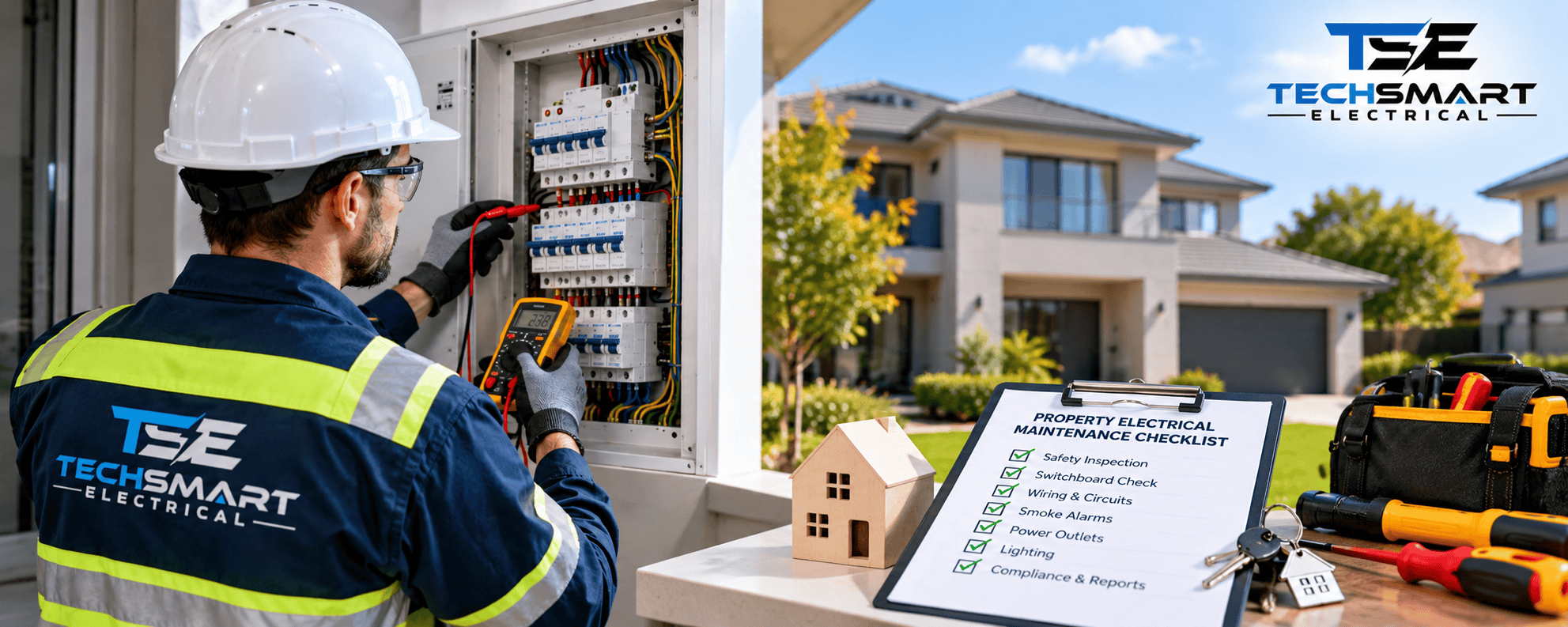
Owning an investment property comes with ongoing responsibilities, and electrical maintenance is one area landlords should not overlook. A faulty power outlet, a damaged light fitting or a smoke alarm that fails to operate can affect tenant safety, interrupt daily routines and lead to expensive repairs if the problem is left unattended.
For landlords, good maintenance is not simply about fixing electrical problems when they occur. It means understanding the condition of the property’s electrical systems, arranging appropriate inspections, responding to tenant reports and keeping clear records of completed work.
A proactive approach to rental electrical maintenance Caroline Springs can help property owners manage risks, plan repairs and maintain their properties more effectively. It can also make it easier to address minor issues before they develop into more disruptive problems.
This guide explains how landlords can approach electrical maintenance, what to check, when to seek professional assistance and how to maintain useful records. It also explores how Techsmart Electrical can help property owners organise appropriate electrical maintenance for their rental properties.
The advice is intended for residential investment properties in Caroline Springs, Victoria. Specific legal obligations depend on the property, the work involved and the current Victorian regulations, so landlords should verify requirements before relying on a particular inspection schedule or compliance deadline.
Electrical systems are used every day, often without much thought. Tenants rely on them for lighting, cooking, heating, cooling, charging devices and operating household appliances.
Over time, electrical components can deteriorate, connections can loosen, and equipment can become unsuitable for the property’s needs. Some problems develop gradually, while others appear suddenly.
Regular rental maintenance helps landlords identify issues that need attention and distinguish routine upkeep from repairs that require urgent action.
Electrical faults can create risks such as electric shock, overheating and electrical fires. Damaged cords, cracked outlets, exposed wiring and recurring circuit-breaker trips should never be dismissed as minor inconveniences.
For example, imagine a tenant reports that a power outlet in the living room feels unusually warm. The outlet may have a damaged connection or another underlying fault. Simply asking the tenant to use a different socket does not resolve the original problem.
A safer response is to stop using the affected outlet and arrange assessment by a licensed electrician. The electrician can investigate the cause, determine what repairs are needed and advise whether related parts of the installation require further attention.
A planned maintenance approach can help landlords identify deteriorating components before they cause larger disruptions. It cannot eliminate every unexpected fault, but it may reduce the likelihood of avoidable emergency call-outs.
Consider an investment property with an older switchboard. During an appropriately arranged inspection, an electrician may identify deterioration, unsuitable components or other concerns that warrant further investigation. The landlord can then consider the recommended work, obtain a clear quote and plan the repair rather than waiting for a more disruptive failure.
Tenants generally want a property where essential services work reliably and reported faults receive a timely response.
Promptly addressing electrical issues can improve communication between landlords, property managers and tenants. It also helps establish a practical maintenance history that can be useful when arranging future repairs or assessing the condition of the property.
Electrical maintenance involves more than replacing a broken light bulb. It can include assessing electrical installations, investigating reported faults, repairing damaged components and checking relevant safety devices.
For rental property owners, the correct approach depends on the age and condition of the building, the type of electrical installation, the property’s maintenance history and any applicable legal requirements.
Depending on the property’s needs, professional electrical maintenance may cover:
Not every property requires every item during every visit. The electrician should explain the scope of the inspection, what was assessed, any limitations and whether additional testing is recommended.
There is no single inspection interval that is suitable for every electrical component and every property. Landlords should distinguish between statutory inspection or testing requirements, manufacturer recommendations, condition-based maintenance and additional checks prompted by a specific concern.
An electrical assessment may be appropriate when:
An inspection should not be treated as a guarantee that every concealed or intermittent fault has been identified. Its value depends on the agreed scope, access to relevant areas and any testing performed.
Electrical safety is both a practical maintenance concern and a legal responsibility for rental providers. In Victoria, the applicable requirements include regular electrical safety checks, suitable safety devices and the maintenance of electrical installations in safe working order.
As of October 2026, Victorian rental providers must arrange an electrical safety check at least every two years. From 13 October 2026, the two-yearly gas and electrical safety check requirements apply to all rental properties, with gas checks relevant to properties containing gas installations, appliances or fittings.
Landlords should confirm their individual obligations with Consumer Affairs Victoria and Energy Safe Victoria, especially when managing older tenancy agreements or properties with incomplete records.
A compliant check must cover the property’s electrical installations, fixtures and fittings in accordance with the relevant requirements of AS/NZS 3019:2022, Electrical installations—Periodic assessment. The inspection includes visual checks and limited testing within the standard’s scope.
Depending on the installation, the electrician may assess:
An inspection is not necessarily a complete investigation of every concealed wire or intermittent fault. If a problem requires further testing, the electrician should explain the additional work needed.
Landlords should maintain an organised record of the most recent electrical safety check and any outstanding recommendations. Victorian requirements also address disclosure of the last check and provision of records when requested.
A useful maintenance file should include:
Keeping these records together helps landlords and property managers establish what was checked, what needs attention and when the next inspection is due.
Smoke alarms deserve particular attention because they provide an early warning of a potential fire. A property may have functioning lights and power outlets but still have a serious safety concern if its smoke alarms are missing, incorrectly installed or not working.
Victorian rental providers must ensure smoke alarms are correctly installed and in working order, with testing according to manufacturer instructions at least once every 12 months. Required batteries must be replaced, and faulty alarms must be repaired or replaced as an urgent repair.
As part of their maintenance planning, landlords should confirm that:
Do not assume that an alarm is working simply because its indicator light is visible. Follow the manufacturer’s testing instructions and arrange professional assessment if the alarm fails or its condition is uncertain.
Intermittent beeping may indicate a low battery, a fault, contamination or an end-of-life warning, depending on the alarm model. The correct response is to identify the cause rather than remove the battery or disconnect the alarm.
If an alarm is faulty, arrange the necessary repair or replacement urgently. A property manager should also tell the tenant how to report the issue and provide an update on the repair arrangements.
Smoke alarm testing should be recorded separately or clearly identified within the property’s broader maintenance records. This makes it easier to demonstrate that the required checks have taken place.
Power outlets are among the most frequently used electrical fittings in a rental property. They supply appliances, computers, televisions and charging devices, so damage can affect both convenience and safety.
An outlet may look acceptable from the outside while still having an internal problem. Landlords should therefore take tenant reports seriously and arrange professional assessment when there are signs of damage or abnormal operation.
Look out for reports of:
These symptoms do not all have the same cause, and the visible sign alone may not identify the fault.
For instance, a tenant may report that a plug has become loose in a bedroom outlet. The landlord should not assume that replacing the faceplate will solve the problem. A licensed electrician can assess whether the outlet, connections or associated wiring require repair.
First, tell the tenant to stop using the affected outlet. If there is smoke, a burning smell, active sparking or another indication of immediate danger, keep people away and seek appropriate emergency assistance. Do not touch damaged electrical equipment.
Arrange a qualified electrician to investigate the fault and determine the appropriate repair. Where the problem creates an unsafe condition, treat the response as urgent rather than waiting for the next scheduled inspection.
Older rental properties may have fewer outlets than modern households require. Tenants may be tempted to use multiple adaptors or extension leads to accommodate their equipment.
Adding power outlets may be a sensible improvement, but it requires an assessment of the existing circuit, electrical load, installation requirements and applicable standards. Additional outlets should not simply be added wherever there is a convenient wall space.
Techsmart Electrical can help property owners assess reported outlet problems and discuss appropriate electrical maintenance or upgrade options based on the property’s needs.
The switchboard is a central part of the property’s electrical protection system. It distributes electricity to circuits and houses protective devices designed for particular electrical faults.
A well-maintained switchboard is especially important in investment properties, where the electrical installation may have been modified over several decades.
An electrician may identify issues such as damaged components, unsuitable circuit protection, inadequate labelling or equipment that requires further assessment.
Landlords should also understand the difference between a circuit breaker and a residual current device (RCD), often called a safety switch.
These devices serve different purposes and are not interchangeable. A safety switch also does not eliminate every electrical risk.
Victorian rental minimum standards require modern switchboards with circuit breakers and electrical safety switches. The requirements for power outlets and lighting circuits also include specified circuit-breaker and RCD protection.
An upgrade may be appropriate when an inspection identifies non-compliant or deteriorated equipment, when required protection is missing, or when planned electrical work changes the installation’s needs.
The correct solution depends on the existing board, the property’s circuits, the condition of the wiring and the applicable standards. A complete switchboard replacement is not automatically necessary simply because a property is old.
Ask the electrician to explain:
This approach helps landlords make informed decisions instead of approving upgrades without understanding the underlying issue.
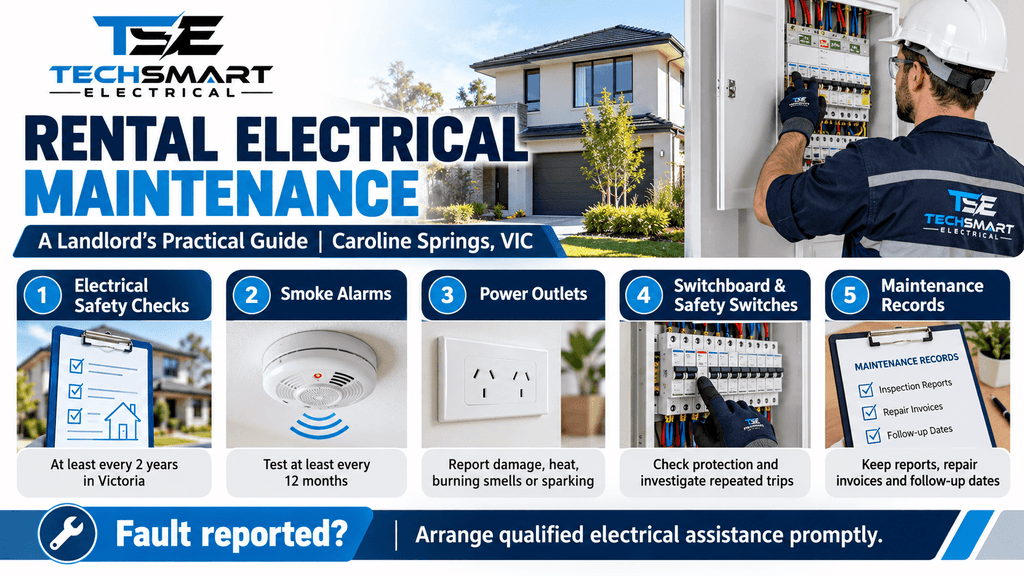
A structured inspection plan makes it easier to manage multiple properties, coordinate tradespeople and avoid missing important maintenance dates.
For landlords searching for a Caroline Springs Electrician, the priority should be finding a suitably licensed professional who understands residential rental safety requirements and provides clear documentation.
The following schedule is a starting point. Statutory requirements and manufacturer instructions take priority over any general recommendation in this table.
| Maintenance task | Suggested timing |
| Electrical safety check | At least every two years, as required in Victoria |
| Smoke alarm testing | At least every 12 months |
| Reported electrical faults | Assess promptly; urgent hazards require immediate action |
| Switchboard concerns | During scheduled checks or whenever a fault is suspected |
| Power outlet damage | As soon as the issue is reported |
| Review of maintenance records | After each inspection or repair |
| Follow-up on outstanding recommendations | By the priority and timeframe advised by the electrician |
The two-yearly electrical safety check and annual smoke alarm testing requirements are established by Victorian rental safety rules. Other entries are practical maintenance recommendations rather than separate statutory inspection intervals.
A simple calendar can help landlords manage recurring inspections. Record the date of the last check, the next due date and any work that remains outstanding.
For example, if a property has an electrical safety check scheduled for November, a reminder in October gives the landlord time to contact the property manager, arrange access and discuss any known faults with the electrician.
For owners with several investment properties, use one maintenance register with a separate entry for each address. This reduces the risk of confusing inspection reports or overlooking a property.
An electrical inspection Caroline Springs landlords arrange should have a clearly defined scope and produce a useful record of the findings.
Before booking, confirm:
A report should do more than say that someone visited the property. It should help the owner understand the findings and the next steps.
Scheduled inspections are important, but they cannot replace a prompt response to problems reported between visits.
Rental electrical repairs Caroline Springs landlords arrange should be based on the nature of the fault, its potential safety implications and the electrician’s assessment.
Some electrical issues can wait for a scheduled appointment, while others require immediate attention.
Examples of potentially urgent concerns include:
Victorian rental rules classify dangerous electrical faults and faulty smoke alarms as urgent repair matters. Landlords and their agents should follow the applicable urgent-repair procedures rather than delaying action until the next routine inspection.
If a tenant reports an electrical hazard, acknowledge the report, explain immediate precautions and organise suitable professional assistance. If there is smoke or fire, move to safety and contact emergency services.
Imagine a tenant in Caroline Springs reports that the circuit breaker trips whenever they use the kitchen kettle.
A poor response would be to tell the tenant to keep resetting the breaker or to use an extension lead from another room.
A more appropriate process is to:
This process avoids guessing at the cause and creates a clear record of how the problem was managed.
Maintenance records are valuable because they provide a history of inspections, faults, repairs and decisions. They can help landlords understand recurring problems and demonstrate that required checks have been arranged.
Victorian rental providers must retain the most recent electrical safety check record until a record of the next check is created. They must also provide a copy within seven days after receiving a renter’s written request.
For each inspection or repair, record:
Store the documents securely and make them accessible to the owner or authorised property manager.
Suppose an electrician has attended the same property several times because a particular circuit keeps tripping. Reviewing earlier reports may reveal that the issue has persisted or that recommended follow-up work remains incomplete.
The records do not establish the cause by themselves, but they provide useful context for the next assessment.
This is also why landlords should retain repair reports rather than relying only on invoices. An invoice may show that work was completed, while a report can explain what was found and what further action was recommended.
Even well-intentioned property owners can overlook important details when managing repairs.
Electrical equipment can have defects that are not obvious during everyday use. Working lights and outlets do not replace a required electrical safety check.
A trip may result from an overloaded circuit, a faulty appliance or another electrical problem. Repeatedly resetting the breaker without investigating the cause is not a suitable maintenance strategy.
A smoke alarm that has not been tested recently may not provide the intended warning during an emergency. Keep a record of testing and respond promptly to reports of faults.
Electrical work must be performed by appropriately qualified and authorised people. Check the professional’s credentials and confirm that they are permitted to perform the particular work required.
An inspection has limited value if significant findings are left unresolved. Ask the electrician to distinguish urgent safety concerns from lower-priority recommendations and arrange follow-up accordingly.
Electrical safety requirements and the property’s condition can change. Keep records current, address new faults as they arise and verify any legal requirements that apply to the property.
A few consistent habits can make rental property maintenance easier to manage.
1. Book required checks before they become overdue. Use calendar reminders and confirm the next due date immediately after receiving a report.
2. Ask for clear explanations. If an electrician recommends an upgrade, request a description of the defect, the risks involved and the reason for the proposed solution.
3. Keep urgent repairs separate from planned improvements. Address immediate safety concerns first. Budget for other work according to the electrician’s findings and the applicable requirements.
4. Make reporting easy for tenants. Provide a clear process for reporting electrical faults and explain what information is helpful, such as the affected room, the symptoms and when the issue began.
5. Review older properties carefully. Properties with limited maintenance records may need a more deliberate initial assessment so that future decisions are based on documented findings rather than assumptions.
6. Coordinate maintenance through your property manager. Agree on who will arrange access, communicate with tenants, approve work and retain reports. Clear responsibilities help prevent delays.
7. Use a qualified local professional. Techsmart Electrical can be a point of contact for landlords seeking assistance with electrical maintenance, fault investigation and repairs in the Caroline Springs area. Confirm the required scope, availability and relevant qualifications when arranging work.
Managing an investment property involves balancing tenant needs, maintenance costs and ongoing responsibilities. A reliable process for electrical work can make that task more manageable.
Techsmart Electrical can assist landlords with appropriate electrical maintenance and repair needs, helping them identify issues, understand recommended work and organise the next steps.
Depending on the property’s requirements, this may include:
The appropriate service depends on the property and the issue identified. Landlords should confirm availability, service scope and any applicable fees directly with Techsmart Electrical before booking.
Rather than waiting for a fault to disrupt a tenancy, consider reviewing your property’s inspection dates, maintenance history and outstanding recommendations. A planned approach makes it easier to identify priorities and keep important records in order.
Effective electrical maintenance is an important part of responsible investment property management. Regular safety checks, annual smoke alarm testing, prompt attention to reported faults and organised maintenance records all contribute to a more reliable approach to managing a rental property.
For landlords, rental electrical maintenance Caroline Springs should be treated as an ongoing responsibility rather than a task to consider only when something breaks. A clear maintenance schedule can help identify concerns, plan repairs and keep documentation accessible.
If your investment property has an overdue electrical safety check, unresolved repair recommendations or a reported electrical fault, review the situation and arrange appropriate professional assistance. Techsmart Electrical can help you discuss your property’s electrical maintenance needs and identify practical next steps.
Victorian rental providers must arrange an electrical safety check at least once every two years. The check must cover the electrical installations, fixtures and fittings required by the relevant regulations and applicable standard.
Additional maintenance may be needed between scheduled checks if a tenant reports a fault, an inspection identifies a defect or electrical work affects the installation. Smoke alarms have a separate requirement for testing at least once every 12 months.
Landlords should maintain a record of each check, address outstanding recommendations and confirm the next due date with their electrician or property manager.
The check covers the relevant electrical installations, fixtures and fittings in accordance with the applicable requirements of AS/NZS 3019:2022.
Depending on the installation, this can include assessing accessible wiring, switches, power outlets, lighting, the switchboard and relevant protective devices. The inspection includes visual checks and limited testing within its defined scope.
If the electrician identifies a concern that requires further investigation or repair, ask for a clear explanation of the issue and the recommended next step. An electrical safety check should not be assumed to include every possible diagnostic test or repair unless those services are specifically included in the agreed scope.
Rental providers are responsible for maintaining the property in good repair and meeting applicable electrical safety obligations. This includes arranging required safety checks and addressing faults that affect safety or the property’s condition.
Dangerous electrical faults are urgent repair matters under Victorian rental rules. Landlords and property managers should act promptly when notified of such problems and follow the relevant legal procedures.
The correct repair depends on the cause of the fault. A qualified electrician should assess the problem and explain the work required. Landlords should retain the resulting documentation and verify that any outstanding safety recommendations have been addressed.
Smoke alarms have their own maintenance requirements. Victorian rental providers must ensure that alarms are correctly installed and working, test them according to manufacturer instructions at least once every 12 months, and replace batteries when required.
A general electrical safety check should not be assumed to satisfy the annual smoke alarm testing requirement unless the relevant testing has actually been completed and documented.
Keep clear records of smoke alarm testing, maintenance and replacements. If an alarm is faulty, arrange repair or replacement as an urgent repair rather than waiting for the next annual check.
Start by maintaining a record of the property’s electrical safety check, known faults and outstanding recommendations. Set reminders for required inspections and give tenants a clear process for reporting problems.
When an issue arises, record the symptoms and arrange appropriate professional assistance. If the fault appears dangerous, treat it as urgent and ensure the affected equipment is not used until it has been assessed or made safe.
For non-urgent work, ask for a clear explanation of the recommended repair, the likely scope and any additional testing required. Once the work is completed, retain the invoice and relevant documentation.
Techsmart Electrical can be contacted to discuss suitable electrical maintenance or repair arrangements for an investment property in Caroline Springs.
Techsmart Electrical is a locally owned company serving Melbourne and the surrounding areas. As leading specialists for commercial, industrial and residential electrician services, we prioritize customer satisfaction.


We are preferred electricians for Beacon Lighting and with that comes many bonuses for our customers. By using Techsmart Electrical as your preferred electrician, we can provide you with up to 20% off RRP of everything in store at Beacon Lighting, extended warranties on certain items and even free lighting design consultations.
Our team works closely alongside our home store in Taylors Lakes to deliver the best possible outcome for all installations. From installing one ceiling fan to wiring an entire home, Techsmart Electrical provides 100% satisfaction guarantee.
Contact us today to arrange your next installation.
Techsmart Electrical has always provided dependable and cutting-edge electrical contracting services and installations. Our qualified electricians offer services that are intended to support Melbourne businesses in growing and to give homeowners complete peace of mind.
It is entirely up to you where you want more power outlets in your home. Techsmart Electrical can install them wherever you need them. It's possible that all you need is to change your power outlets, which is a regular request. Even your outdated power sockets can be replaced with fresh models by our team in order to give your house the finishing touches.
With several years of experience, Techsmart Electrical’s licenced electricians can design and install any power point system, whether it's for a newly constructed home or an existing one. Call us and schedule a time for your power socket installation.












Techsmart Electrical is a Melbourne based electrical company. We understand the importance of top-quality workmanship, service and safety. With a professional approach, we are always ready to provide you with Master Electricians to deliver prompt electrical services for any situation.