

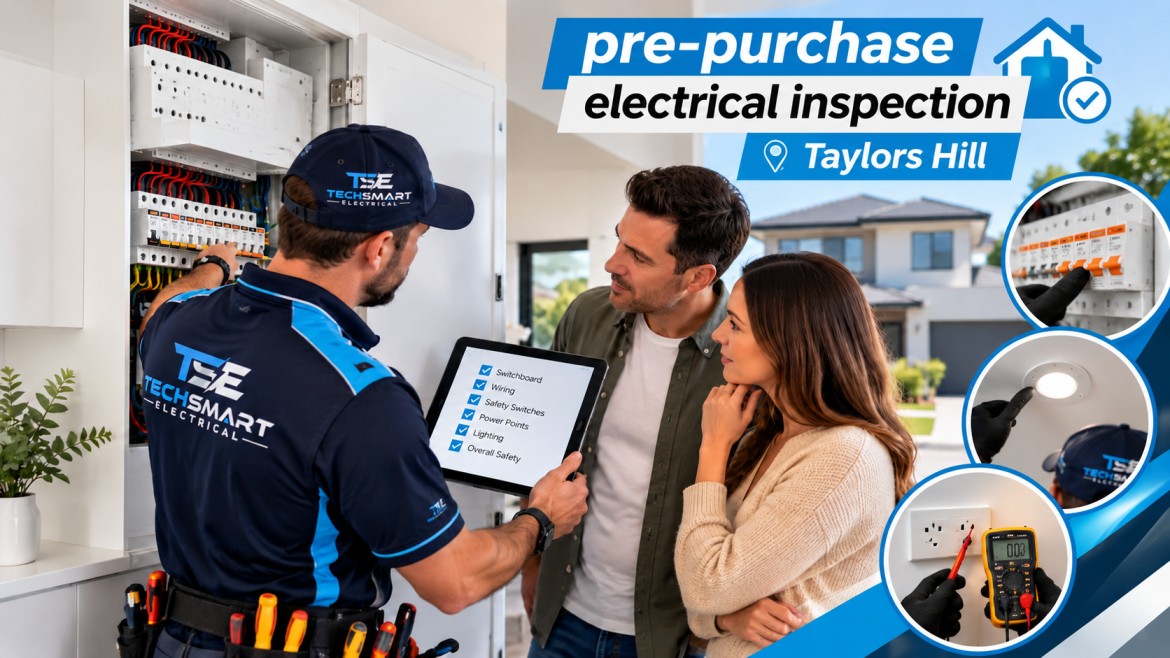
Buying a home is exciting, but a property that looks perfect during an inspection can still hide electrical problems behind walls, ceilings, fittings, and inside the switchboard. A fresh coat of paint may make a room look new, while ageing wiring or poorly completed electrical modifications remain out of sight.
That is why a pre-purchase electrical inspection in Taylors Hill can be an important part of the buying process. It allows prospective homeowners to understand the condition of the property’s electrical installation before committing to a major purchase.
Electrical problems are not always dramatic. Sometimes they appear as flickering lights, frequently tripping safety switches, damaged power points, or an outdated switchboard. Other issues may not be obvious without appropriate testing.
A professional inspection is not about finding faults for the sake of finding faults. It is about understanding what is present, identifying safety concerns, and giving the buyer useful information for making an informed decision.
A standard home inspection can identify many visible building issues, but electrical systems require specialist knowledge and appropriate testing.
An electrical assessment can look more closely at areas such as:
For a buyer, this information can be particularly useful when comparing properties.
Imagine finding your ideal home, negotiating the purchase and moving in, only to discover that several circuits need attention. The cost and disruption could have been considered before the purchase if the electrical condition had been assessed earlier.
A pre-purchase inspection therefore provides another layer of information alongside the building and pest inspection.
A professional Electrical inspection is generally focused on the condition and safety of accessible electrical components.
The exact scope depends on the property and the electrician’s testing approach, but an inspection may consider:
The condition of visible and accessible wiring can provide important clues about the electrical installation.
An electrician may look for signs such as:
Not every older cable means the entire property requires rewiring. The important point is understanding what is actually present and whether further investigation is warranted.
The Switchboard is one of the most important areas to examine.
It contains protective devices that help control and protect electrical circuits throughout the property. An inspection can identify visible concerns such as damaged components, inadequate labelling, outdated equipment, or other conditions requiring professional attention.
A switchboard assessment can be especially useful when purchasing an older home or a property that has undergone multiple renovations.
Safety switches play an important role in protecting people from electric shock by monitoring electrical current and disconnecting power when an imbalance is detected.
However, simply seeing a safety switch does not automatically mean the entire electrical system is safe.
The condition, operation and coverage of protective devices need to be considered as part of the broader electrical assessment.
A general Home inspection usually considers the overall physical condition of a property, including areas such as the roof, structure, drainage and visible building elements.
An electrical inspection has a much narrower technical focus.
An electrician is specifically looking at the electrical installation and associated safety concerns.
The two inspections complement each other rather than replace one another.
For example, a building inspector may notice a damaged power point and recommend further electrical investigation. An electrician can then assess the electrical component more specifically.
For a buyer, having both perspectives can provide a more complete understanding of the property.
A practical pre-purchase electrical inspection checklist can help buyers understand what they should ask about before an inspection takes place.
Ask whether the switchboard appears serviceable and whether protective devices are present and appropriately configured.
Ask whether accessible wiring shows signs of deterioration, damage, unusual alterations, or other concerns.
Check whether safety switches are installed where appropriate and whether their operation can be tested safely by the electrician.
Look for damaged, loose, cracked, or unusually warm outlets.
The electrician may assess accessible lighting installations and investigate obvious signs of faults.
Ask whether there are signs that electrical work has been added or modified over time.
Outdoor power points, lighting and other electrical installations should not be overlooked, particularly because exposure to weather can create additional risks.
Any exposed conductors, damaged fittings, burn marks or signs of overheating should be recorded and assessed.
Ask what testing was undertaken and whether any limitations affected the inspection.
A useful Report should clearly explain significant findings rather than leaving the buyer with unexplained technical terminology.
Electrical wiring can remain hidden for decades.
That means a property can look beautifully renovated while some parts of its electrical installation may be considerably older.
This is particularly important in homes that have experienced several renovations.
For example, a homeowner may have renovated the kitchen, added new lighting and installed additional appliances without completely modernising the rest of the electrical installation.
This does not automatically mean the installation is defective. However, increased electrical demand and modifications make it sensible to understand how the system has evolved.
A professional electrician can identify visible concerns and determine whether additional investigation is appropriate.
A switchboard assessment can reveal information that is difficult for an ordinary buyer to establish during a property inspection.
An electrician may assess:
One practical point is that a switchboard should not be judged by appearance alone. Techsmart Electrical helps homeowners identify electrical concerns before purchasing a property, providing practical information about potential safety issues.
A neat-looking enclosure does not necessarily tell you everything about the electrical installation, while an older-looking switchboard does not automatically mean the property is unsafe.
Testing and professional assessment provide much better information than appearance.
Ideally, the electrical inspection should occur before the purchase becomes unconditional, where the contract and circumstances allow.
The exact timing will depend on the property transaction and any conditions in the contract.
Buyers should speak with their conveyancer or solicitor about the legal and contractual implications of inspections and building conditions.
From a practical perspective, earlier information is more useful.
If an inspection identifies a significant issue, the buyer has more opportunity to understand:
The electrician’s role is to provide technical information, not to make the purchasing decision for the buyer.
Every property is different, but recurring concerns can include:
Cracked covers, loose outlets, heat marks or other visible damage deserve attention.
A circuit may have protective equipment that requires assessment or upgrading.
Poor circuit identification can make future maintenance and fault isolation more difficult.
Older wiring is not automatically dangerous, but its condition and suitability should be assessed.
Unusual installations or alterations can warrant closer professional investigation.
If the owner reports that a breaker or safety switch frequently trips, this should not be dismissed as normal behaviour.
Weather-exposed outlets, lighting and other equipment may require particular attention.
You should never remove electrical covers or attempt to test wiring yourself.
However, buyers can observe obvious warning signs.
Look and listen for:
Ask the selling agent whether the property has experienced recurring electrical problems.
Remember that an open-home observation is not an electrical inspection. It is simply an opportunity to identify questions worth asking a qualified professional.
A Taylors Hill Electrician should be able to explain the findings in language a homeowner can understand.
Useful questions include:
What did you find?
Ask for the main issues to be explained clearly.
Why is this a concern?
Not every defect has the same level of importance.
Is further investigation necessary?
Some issues cannot be fully assessed without additional access.
Is this an immediate safety concern?
Understanding urgency helps buyers prioritise issues.
What parts of the property could not be assessed?
A transparent inspection should identify limitations.
What testing was performed?
This helps you understand the scope of the assessment.
What should be addressed first?
A practical priority list can be more useful than a long list of technical observations.
No inspection should be presented as a guarantee that a property has no future electrical problems.
Electrical systems contain components that may be concealed, inaccessible or dependent on circumstances that are not present during the inspection.
For example, an intermittent fault may not occur while the electrician is at the property.
Similarly, concealed wiring cannot always be fully assessed without opening walls or other building surfaces.
A trustworthy electrical safety inspection Taylors Hill should therefore explain its scope and limitations.
This is an important part of EEAT because transparency is just as valuable as technical knowledge.
A building inspection and electrical inspection have different purposes.
A renovated kitchen does not necessarily mean the entire electrical installation was replaced.
A loose outlet or flickering light may seem minor, but recurring symptoms should be investigated.
The more important question is often whether an issue represents a safety concern, requires urgent attention or indicates broader deterioration.
Not every older property needs complete rewiring.
A professional should first establish what is actually wrong.
Two inspections may have very different levels of assessment. Buyers should understand what is included rather than comparing prices alone.
A professional inspection gives buyers better information at an important point in the purchasing process.
Suppose two houses have similar prices.
House A has an electrical installation that appears well maintained, with only minor recommendations.
House B has several recurring circuit faults, an ageing switchboard and evidence of previous electrical modifications requiring further investigation.
The inspection does not tell the buyer which house to purchase. Instead, it gives the buyer information that can be considered alongside the property’s condition, price and plans.
This is the practical value of a pre-purchase electrical inspection in Taylors Hill.
It reduces uncertainty.
A useful Report should be understandable and specific.
Depending on the scope, it may identify:
Avoid relying on a report that simply lists technical terms without explaining their significance.
As a buyer, you should understand what the electrician found and which issues deserve priority.
If the seller has documentation relating to previous electrical work, it may provide useful background.
Ask whether kitchens, bathrooms, garages, extensions or outdoor areas have been renovated.
A recurring electrical fault reported by the current owner is valuable information for the inspector.
The earlier you know about significant issues, the more informed your decision can be.
The purpose of the assessment is to give you an objective understanding of the electrical condition rather than simply confirming that the property looks good.
The best inspection is not simply a search for defects.
It helps establish a baseline.
A home buyer may discover that the property has a few minor electrical items requiring attention but no major concerns. Another property may require significantly more investigation.
Both outcomes are useful.
The goal is to replace assumptions with evidence.
For this reason, a pre-purchase electrical inspection checklist should be treated as a decision-support tool rather than a guarantee that every hidden problem will be discovered.
Buying a home involves more than assessing the kitchen, bedrooms, garden and overall appearance. Electrical systems are an essential part of the property, yet much of the installation is hidden from everyday view.
A pre-purchase electrical inspection in Taylors Hill allows buyers to understand the condition of accessible electrical components before making a major financial commitment.
Pay particular attention to Wiring, the Switchboard, Safety switches, visible electrical damage, recurring faults and evidence of previous modifications.
The most useful approach is to combine a professional electrical assessment with a broader building inspection and appropriate legal and contractual advice.
Most importantly, don’t assume that a new-looking home has a completely new electrical system. Ask questions, understand the inspection’s limitations, and use the findings to make a better-informed decision.
A well-planned pre-purchase electrical inspection checklist can help turn an uncertain property purchase into a more informed one. For added peace of mind before settlement, Techsmart Electrical can help buyers understand the condition of accessible electrical systems and potential safety concerns.
A pre-purchase electrical inspection is an assessment of a property’s accessible electrical installation before a buyer completes a purchase. Depending on the agreed scope, it can examine areas such as the switchboard, protective devices, accessible wiring, outlets, switches, and other electrical components. The electrician should also explain any limitations, because concealed or inaccessible components cannot always be fully assessed without additional investigation.
A general building inspection and an electrical inspection serve different purposes. A building inspector may identify visible electrical concerns but is not a substitute for a qualified electrician assessing electrical systems. An electrical inspection provides more focused information about wiring, circuit protection, safety switches, switchboard condition, and other electrical components. Using both inspections gives a buyer a broader understanding of the property.
Ideally, arrange the inspection early enough in the purchasing process that the findings can still be considered within the applicable contract conditions. The exact timing depends on the transaction, so buyers should discuss inspection conditions and deadlines with their conveyancer or solicitor. From a practical perspective, an inspection is most useful when there is still an opportunity to investigate significant findings before finalising the purchase.
Not necessarily. Age or appearance alone does not establish whether an electrical installation is unsafe. A professional assessment should consider the condition of the switchboard, protective devices, circuit requirements and other relevant factors. If an upgrade is recommended, the buyer can then consider its priority and implications alongside the property’s overall condition and purchase decision.
First, ask the electrician to explain exactly what was found, why it matters, and whether further investigation is required. Separate immediate safety concerns from lower-priority maintenance recommendations. Then discuss the findings with your conveyancer or solicitor if they may affect the purchase contract. Depending on the circumstances, you may decide to proceed, seek further information, reconsider the purchase or negotiate based on the broader property situation. The important point is to make that decision using clear technical information rather than assumptions.
Techsmart Electrical is a locally owned company serving Melbourne and the surrounding areas. As leading specialists for commercial, industrial and residential electrician services, we prioritize customer satisfaction.


We are preferred electricians for Beacon Lighting and with that comes many bonuses for our customers. By using Techsmart Electrical as your preferred electrician, we can provide you with up to 20% off RRP of everything in store at Beacon Lighting, extended warranties on certain items and even free lighting design consultations.
Our team works closely alongside our home store in Taylors Lakes to deliver the best possible outcome for all installations. From installing one ceiling fan to wiring an entire home, Techsmart Electrical provides 100% satisfaction guarantee.
Contact us today to arrange your next installation.
Techsmart Electrical has always provided dependable and cutting-edge electrical contracting services and installations. Our qualified electricians offer services that are intended to support Melbourne businesses in growing and to give homeowners complete peace of mind.
It is entirely up to you where you want more power outlets in your home. Techsmart Electrical can install them wherever you need them. It's possible that all you need is to change your power outlets, which is a regular request. Even your outdated power sockets can be replaced with fresh models by our team in order to give your house the finishing touches.
With several years of experience, Techsmart Electrical’s licenced electricians can design and install any power point system, whether it's for a newly constructed home or an existing one. Call us and schedule a time for your power socket installation.












Techsmart Electrical is a Melbourne based electrical company. We understand the importance of top-quality workmanship, service and safety. With a professional approach, we are always ready to provide you with Master Electricians to deliver prompt electrical services for any situation.